


Archive for Oakfield Solomon Footloose

The Walnutlawn Way: Beating the Giants with Science, Guts, and One Great Cow

Everyone said genomics was hype. Adam Zehr tested six heifers to prove them right. Instead, his 75-cow farm just bred its second consecutive World Dairy Expo Grand Champion sire. Here’s how.
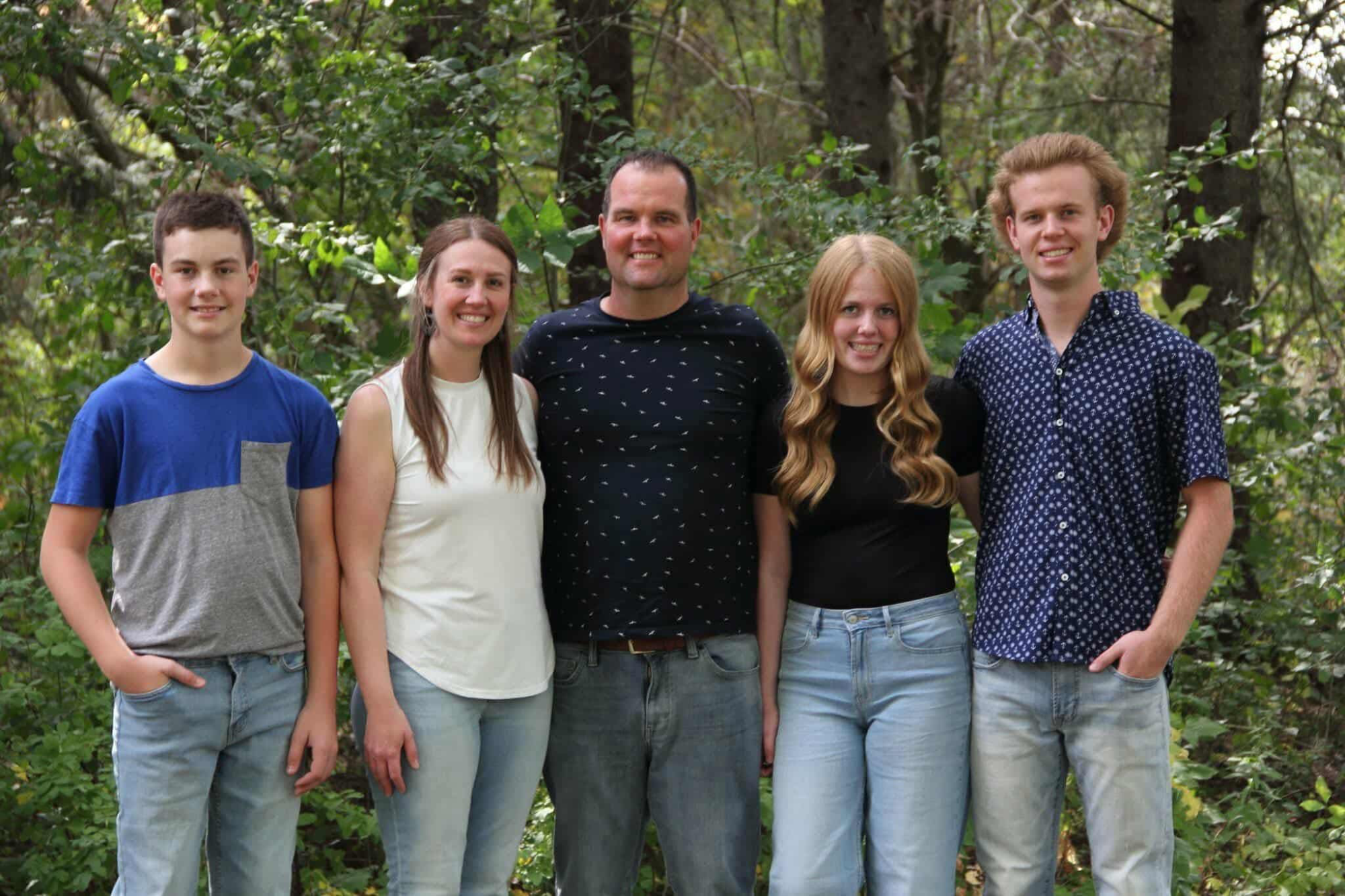
The “Why” behind the “Way.” Adam Zehr and his family represent the fourth and fifth generations at Walnutlawn. The decision to trust genomics wasn’t just a business gamble—it was a move to secure the future for his 75-cow family farm.

You know that feeling when you’re standing in your barn at 4 AM, second-guessing every breeding decision you’ve ever made?

Adam Zehr was right there with you back in 2011. November morning, tie-stall barn near Tavistock. The concrete floor was cold enough to feel through his boots, six Goldwyn sisters lined up in front of him, their breath fogging in the morning air. What he was about to do felt completely crazy at the time—trust a lab test over four generations of family intuition.

Here’s what nobody tells you about moments like these… those six heifers were about to validate more than just genomic testing. They were about to launch a breeding dynasty that would produce not one, but two World Dairy Expo Grand Champion sires. Back-to-back years. From a 75-cow operation.

Let that sink in for a minute. While many of the big genetics companies have thousands of head… a farm milking 75 cows in robots just bred the sires of consecutive Madison champions.

The setting for an impossible dream. This is Walnutlawn Farms, the 75-cow operation where Adam Zehr’s gamble on genomics and one great cow would lead to back-to-back Madison champions.

When the Numbers Started Making Believers of Us All

“Initially I was very skeptical about genomics and what could be gained from it,” Adam told The Bullvine in an exclusive interview.

And honestly, who wasn’t skeptical? Back in 2011, every genetics rep who walked through your door was promising the moon. The difference with Adam was… well, he actually decided to test it instead of just complaining about it at the coffee shop.

Those six sisters—daughters of an EX-94 Gibson cow that represented everything the Zehrs had built over four generations—they became his experiment. Beautiful experiment, mind you. These weren’t culls. He pulled hair samples, sent them off to Guelph, and then…

This is Walnutlawn Raider Nectarine, the great-grandmother of those six Goldwyn sisters. She represents the “four generations of family intuition” and the Master Breeder reputation that Adam was about to test science against.

Then he waited for the science to fail.

Except it didn’t.

I remember talking to a producer from Michigan around that same time who’d tested twenty heifers. Not one matched their genomic predictions. Complete disaster. Cost him a fortune in wasted matings. But Adam’s story? Different ending entirely.

As each heifer calved over those next months, something remarkable kept happening. The one predicted to have the killer udder? She had it. Wide rear attachment, perfect teat placement, the works. The one with mediocre production genomics? Yep, barely making quota. But here’s what got him—the consistency. Every. Single. Time.

“Each of those six cows looked and performed in line with what the genomics had predicted. Classification and milk recording validated that for me,” Adam recalled.

That was his turning point. Not the hype, not the sales pitch. Six heifers proving the science.

The Conversation That Changed Everything

Now, what Adam did next… this is where most of us would’ve said “that’s nice” and gone back to business as usual.

There was this cow for sale. Misty Springs Lavanguard Sue. Just fresh, scored VG-87 at 18 days in milk. Her genomic parent average? Plus seventeen for type. In 2011, that was astronomical.

The price tag, though…

“She cost a lot,” Adam admits, and even years later, you can hear the weight of that decision. “So I felt there was kind of pressure to turn out maybe. This was kind of my decision. I hope she doesn’t flunk.”

The cow that started it all: Misty Springs Lavanguard Sue. Her high price tag and unheard-of genomic predictions led to “The Conversation That Changed Everything” at the Zehr kitchen table, marking the beginning of Adam’s visionary approach.

Picture this: Adam sitting across from his dad Bernie at the kitchen table. The same table where four generations of Zehrs had made every major farm decision. Bernie had built their Master Breeder reputation one careful mating at a time. And here’s his son wanting to spend serious money—we’re talking enough to upgrade the entire milking system—on one cow.

Bernie looked at his son with that mix of pride and pragmatism every farm dad has. ‘Genomics will be your thing,’ he said, ‘because it’s a young man’s game.’ It wasn’t resistance—it was passing the torch. Bernie saw what those six heifers proved, and he gave Adam the opportunity to run with it.

You can still hear the gratitude in Adam’s voice when he tells this part. His dad didn’t just approve the purchase—he empowered his son to lead the farm into a new era.

I heard from a neighbor of theirs later—everyone in Perth County was talking about it. “The Zehrs bought WHAT?” But Adam… Adam had data. And sometimes data beats tradition.

Sue Becomes the Gift That Kept on Giving

You want to know something funny about expensive cows? Nine times out of ten, they’re complete disasters.

We’ve all seen it happen. Some operation drops major cash at a sale, makes a splash in Holstein World, and three years later? Cricket sounds. The cow’s either dead, won’t flush, or throws nothing but bulls.

Sue was different. Completely, utterly different.

From the moment she settled into the Walnutlawn barn, she flushed like she was getting paid by the embryo. I’m talking consistent double-digit counts. Month after month. While half the “elite” cows in this industry are giving you three or four embryos if you’re lucky. And with these beef-on-dairy prices in 2025? Every pregnancy matters more than ever.

The Zehrs got into this rhythm. Flush Sue monthly. Keep three to five embryos for themselves. Sell the rest to pay bills. Smart, right?

“We were quite shocked at how easy the marketing was. You could name a high price, and if someone thought it was too high, there’s the next one in line,” Adam explained.

But wait—it gets better.

Her first daughter, born at Walnutlawn, was a McCutchen they called Summer. That heifer topped the Canadian Conformation list in 2013.

I was actually at the Royal that year when everyone wanted to see Summer. The Walnutlawn stalls were like… you know when Tiger Woods shows up at a golf tournament? Like that. This heifer just had it. That presence. That look that makes old-timers stop mid-step.

Summer was nominated as an All-American and an All-Canadian as a three-year-old senior. Scored EX-92. But honestly? She was just getting started.
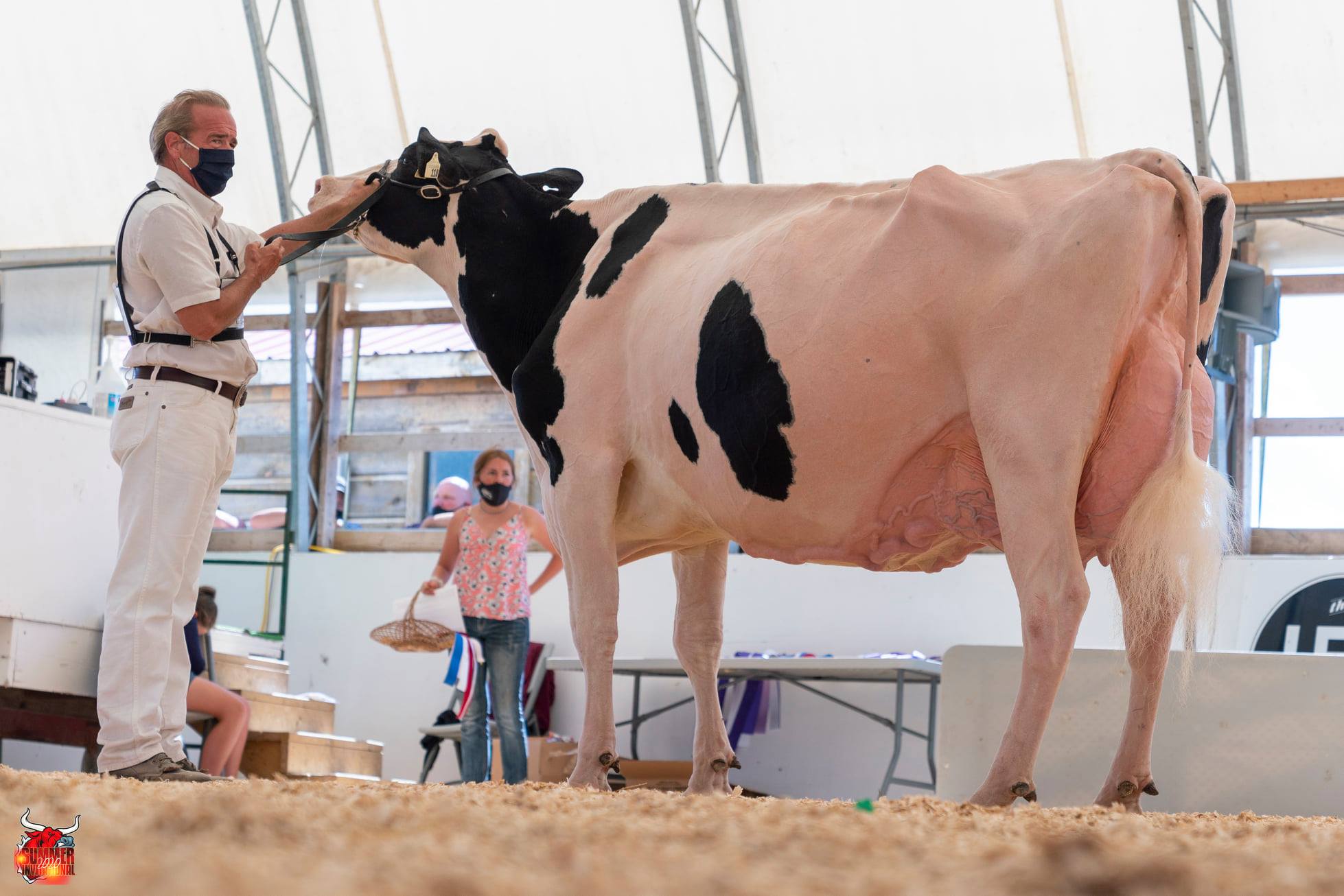
The “gift that kept on giving”: Walnutlawn McCutchen Summer. Sue’s first daughter born at Walnutlawn, she topped the Canadian Conformation list and was nominated All-American. But her greatest contribution to the farm was yet to come.

Solomon: The Bull Who Proved Adam Right

What came next… this is the kind of story that reminds you why we’re all addicted to this business, even when milk prices are doing whatever the hell milk prices are doing right now.

Solomon dropped in 2013. When those genomic results popped up on Adam’s computer screen—sitting in that little farm office overlooking the tie-stalls—he literally had to sit down. The numbers were suggesting this bull could change everything.

“I remember saying to dad, ‘I think Solomon’s going to be used on all the big time show cows,'” Adam recalled.

Bernie gave him that look. You know the one. The “my kid’s lost his mind” look. But Adam wasn’t just reading tea leaves anymore. He’d validated the science with those six sisters. He knew what these numbers meant.

By 2018, Solomon was Canada’s #1 Conformation Sire at plus sixteen. Number two PTAT in the States at plus 3.70. His daughters? Winning everything, everywhere.

Then came October 2024…

Madison Magic: When David Beat Goliath

The “Madison Magic” begins. Oakfield Solomon Footloose’s 2022 Grand Champion win announced her sire, Solomon, and proved that the genetics from a 75-cow Ontario farm could conquer the world.

Oakfield Solomon Footloose, the EX-94 Solomon daughter who’d already claimed Grand Champion at Madison in 2022, was back in the spotlight.

This wasn’t her first rodeo. When Footloose won Grand Champion in 2022, it announced Solomon as a premier sire. The 2024 repeat victory? That just confirmed what everyone already knew—Solomon daughters age like fine wine, getting better with every lactation.

She’s back. Footloose’s 2024 triumph confirmed what the ringside observers knew: “Solomon daughters age into themselves,” and this one was no exception.

Adam watched both victories from his office. ‘Seeing her win that first time in 2022… that’s when I knew Solomon was special. The second time just proved it wasn’t luck.’

Consider what this means: A bull from a 75-cow operation in Ontario had just sired the Grand Champion at Madison. While operations with unlimited budgets and AI studs testing hundreds of bulls every year are watching from the sidelines… Walnutlawn genetics are in the winner’s circle.

I talked to one of the ringside observers later—someone who’s been going to Expo for thirty years. “Solomon daughters,” he said, “they age into themselves. They get better every lactation.”

Now here’s where the story takes a turn nobody saw coming…

Enter Sidekick: Lightning Strikes in the Same Place

“Lightning strikes.” The stall card for Walnutlawn Sidekick shows his direct link to the family: “Dam: Walnutlawn McCutchen Summer.” This is the bull whose “Plus. Twenty. Two.” genomic number seemed too good to be true.

Summer—that McCutchen daughter who’d wowed everyone at the Royal—she had a son. Abbott son, born July 2016. When Adam pulled up Sidekick’s initial genomic evaluation… plus twenty-two for type.

Plus. Twenty. Two.

Even after years of rollbacks and recalibrations (we’ve all been burned by those, haven’t we?), Sidekick held over plus twenty. That’s not normal. That’s not even abnormal. That’s… well, that’s the kind of number that makes you check if the computer’s working right.

“To me, genomics nailed him exactly what he is. He topped every trait except milk,” Adam noted.

And let’s be real—nobody buying Sidekick semen cared about milk volume. With component pricing where it is in 2025, they wanted the type. They wanted cows that make judges stop writing and just look.

By 2021? Seventy-two classified daughters. Semex had already sold more than 180,000 doses worldwide. The bull was printing money.

But October 2, 2025… almost exactly one year after Solomon’s triumph… that’s when everything came full circle.

Adam’s in his farm office again, watching the livestream. Blake, his son, is out working—kid’s seventeen, planning to farm full-time after Grade 12.

Two days. 468 Holsteins. And there in the ring stands Lovhill Sidekick Kandy Cane.

Five years old. Bred by Michael and Jessica Lovich in Saskatchewan. Owned by the Lambs from New York. But her paternal line? That’s Walnutlawn.

“After that class, the way the judge talked, I kind of thought this cow might be Grand. So I went down to the office, and sure enough, when they named her Grand Champion, I was fist-pumping,” Adam recounted.
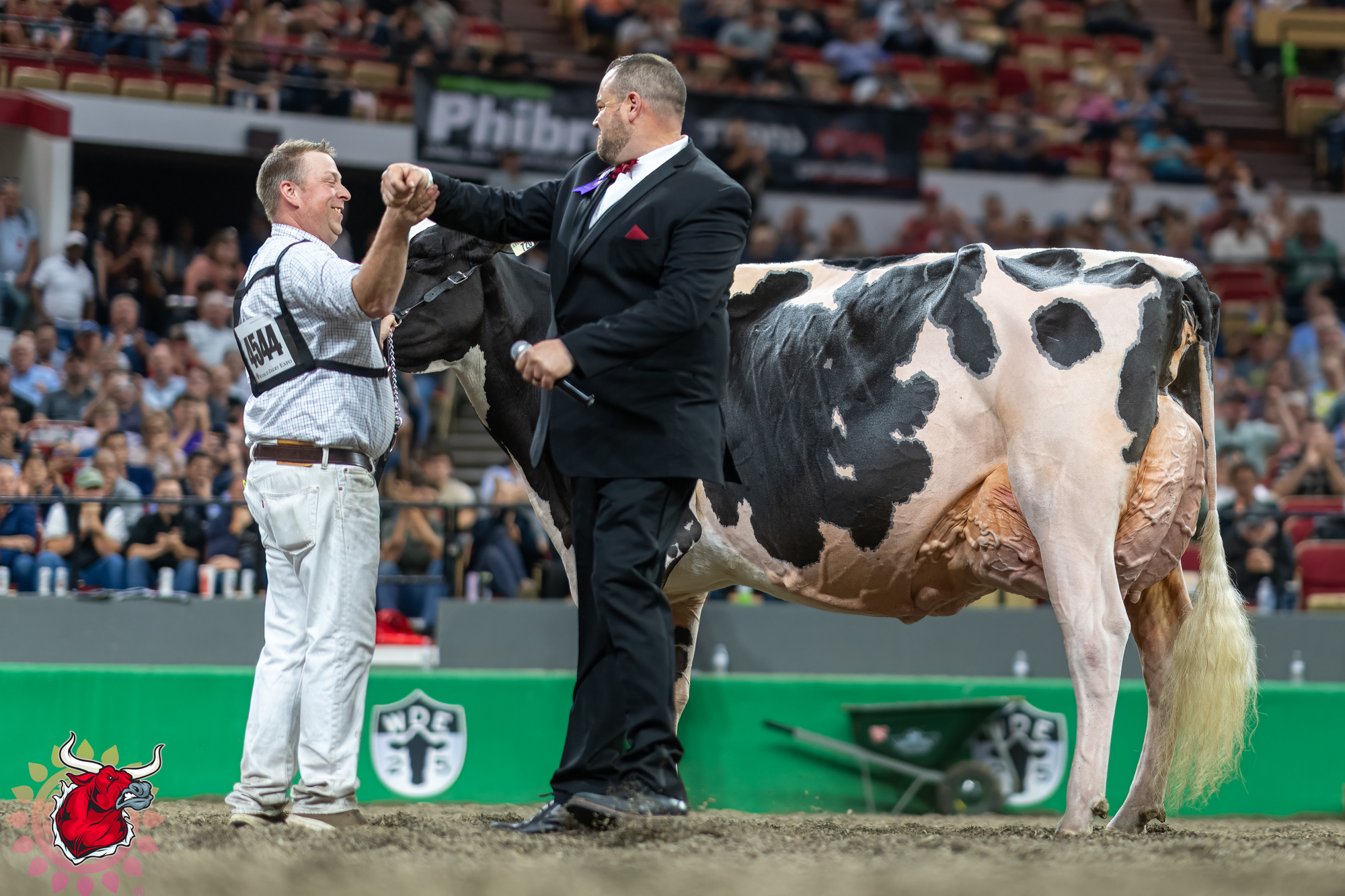
The moment Adam was “fist-pumping” alone in his office. Lovhill Sidekick Kandy Cane completes the impossible, winning Grand Champion in 2025. Her sire, Sidekick, officially cemented the Walnutlawn legacy that began with those six heifers.

Alone. In a farm office. In Tavistock, Ontario. While the Holstein world’s epicenter was in Madison.

Two World Dairy Expo Grand Champion sires. Consecutive years. Both from Sue’s family. From a 75-cow farm.

I called Adam right after. Asked him how it felt. There was this long pause, then: “Dad would’ve loved this.”

Bernie passed from ALS seven years ago. Never saw either championship. But man… his fingerprints are all over these victories.

Why This Matters (And What You Can Actually Do About It)

Look, I get it. Great story, but what’s this mean for the rest of us who don’t have the cash for an expensive foundation female?

That’s exactly the point.

See what’s happening here? While everyone’s chasing volume—while the industry keeps preaching “test more bulls, flush more cows, bigger is better”—Adam just proved them all wrong. Twice.

Here’s the math that’ll blow your mind: Walnutlawn tests 10-15 bulls a year. The big studs? They’re testing 500-800. So statistically, Walnutlawn should get one good bull for every 40-50 the giants produce. Instead? They’re batting 2-for-2 on Madison champions, while operations spending millions are striking out.

You know what the mega-dairies miss? Everything. They miss the cow that visits the robot four times at 400 days in milk, yet it never shows up in their reports. They miss the heifer with perfect angularity because she’s just another number in pen 47. They miss… hell, they miss what makes a cow special because they’re managing by spreadsheet instead of instinct backed by data.

What nobody wants to admit—especially with all this consolidation happening in 2025—is that small farms have advantages the 5,000-cow operations can’t touch. When you’re milking 75 cows with two robots like Walnutlawn, you actually know your animals. Really know them.

Inside Walnutlawn Farms. This 75-cow robot-milking facility is where Adam proved that a breeder who “really knows” their animals can still beat the much larger operations.

Adam still classifies everything. Every. Single. Animal.

“I want our bulls and females to have accurate numbers. I want people to trust them,” he insists.

In an era where genomic manipulation is becoming an open secret—yeah, we all know it’s happening, just look at some of those suspiciously perfect proofs—that integrity is worth more than any championship.

The Bottom Line Nobody Wants to Admit

So here’s what you can actually do tomorrow morning:

Start skeptical, but test your skepticism. Adam didn’t just doubt genomics—he validated his doubts with those six heifers. When the data proved him wrong, he pivoted. Fast. You can do the same thing with five or ten heifers. The cost? Maybe $500. The education? Priceless.

Focus on consistency over volume. At current genomic testing costs, Walnutlawn spends about $3,000 annually testing bulls. The big operations? They’re dropping $150,000 to $200,000. Per Madison champion bred, Walnutlawn’s ROI is literally 50 times better.

Maintain integrity even when it costs you. Every Walnutlawn animal gets classified. Even the disappointments. Start publishing all your scores. Watch how buyers respond.

The Number Three Embryo That Changed Everything

Want to know my absolute favorite part of this whole story?

Summer—the cow whose son Sidekick just bred a Madison champion—she was a number three embryo.

Adam only flushed Sue once to McCutchen. Got five embryos total. Four number ones, one number three. Sold the good ones to Australia. Kept the leftover.

The leftover.

That leftover produced a bulls whose daughters are winning at Madison. Whose semen sold a million plus doses. Whose influence will shape the breed for generations.

Sometimes this business is about genomics, EPDs, and all that scientific stuff we pretend to understand at meetings. But sometimes… sometimes it’s about having an empty recip and thinking “what the hell, let’s throw in that number three.”

The Walnutlawn story proves that the future of dairy breeding isn’t in mega-operations with unlimited budgets. It’s not in testing hundreds of bulls and playing the odds like it’s Vegas.

It’s in breeders who combine their grandfathers’ eye for cattle with modern genomic validation. Who focus on proven cow families instead of genetic lottery tickets. Who maintain integrity even when it costs them.

Adam Zehr did all that. And because he did—because he tested those six sisters, bought that expensive cow, and trusted validated science—a 75-cow farm from Ontario owns a piece of Holstein immortality.

Twice.

Tell me again how you need a thousand-cow dairy to compete? Because I’m looking at the evidence, and it’s telling a different story entirely.

The story says that in 2025, with genomics validated and cow families proven, the advantage has shifted back to those who pay attention. Really pay attention. To every cow, every mating, every embryo.

Even the number threes.

Especially the number threes.

Key Takeaways 

  • Test small before betting big: Validate genomics with 5-10 heifers ($500) before any major investment—Adam’s 6-heifer test led to 2 World Dairy Expo Grand Champions
  • Quality crushes quantity: Walnutlawn tests 15 bulls/year and bred 2 Madison champion sires
  • Your “worst” embryo could be best: The #3 embryo no one wanted became Summer, dam of Madison champion sires Solomon and Sidekick.
  • Transparency pays: Classify and publish scores on every animal—even disappointments—because integrity beats marketing every time

Executive Summary

Six heifers proved Adam Zehr wrong about genomics in 2011, launching his 75-cow Ontario farm toward an impossible achievement: breeding the sires of consecutive World Dairy Expo Grand Champions (2024 and 2025). The journey accelerated when Adam invested in Sue, a high-genomic cow whose descendants—Solomon and Sidekick—would dominate Madison while operations testing 800 bulls annually produced zero champions. The twist nobody saw coming: Summer, Sidekick’s dam, was the #3 embryo Adam kept after selling the “better” ones to Australia—that leftover generated 180,000 doses of elite genetics worldwide. Walnutlawn’s approach (testing 15 bulls yearly for $3,000) delivers 50x the ROI of operations spending $200,000 to chase volume. The blueprint is simple: validate genomics yourself with a small test, focus on proven cow families over genetic lottery tickets, and publish every classification score—even the bad ones—because transparency builds trust and value in an industry drowning in data manipulation

Join the Revolution!

Join over 30,000 successful dairy professionals who rely on Bullvine Weekly for their competitive edge. Delivered directly to your inbox each week, our exclusive industry insights help you make smarter decisions while saving precious hours every week. Never miss critical updates on milk production trends, breakthrough technologies, and profit-boosting strategies that top producers are already implementing. Subscribe now to transform your dairy operation’s efficiency and profitability—your future success is just one click away.


NewsSubscribe
First
Last
Consent

Top 12 Game-Changing News Stories of 2024 That Every Dairy Farmer Needs to Know

Explore the top 12 essential news stories of 2024 that every dairy farmer needs to know. Ready to revolutionize your farm with these insights?

In the fast-changing world of the dairy industry, staying informed isn’t just a good idea—it’s a must. With new inventions, market changes, and significant events, one piece of news can significantly affect your daily work. Think about each news story as a puzzle that helps you plan for the future. This year, the news stories show how things are changing and the challenges we face. They are about not just surviving but also getting stronger. These stories can potentially influence farmers’ operations in the coming year and spark new ideas. 

“Knowing what’s happening can mean the difference between a successful year and a tough one.”

Let’s look at the top 12 news stories of 2024. Get ready to learn about essential events every dairy farmer needs to know. From setting records and facing surprises to big decisions and new trends, these stories show what’s happening in the industry. This information could change your future in dairy farming. Get ready for the ride. 

12. Meet Viatine-19: The World’s Most Expensive Cow Worth $4 Million.

Viatine-19, a Nelore meat cow hailing from Minas Gerais, Brazil, recently fetched a remarkable four million dollars, underscoring the critical role of elite animals in today’s marketplace and the impact of genetic excellence in meat production. With roots tracing back to the Ongole cattle of India, the Nelore breed is celebrated for its heat tolerance, disease resistance, and adaptability to grazing—a combination that gives it undeniable economic value. Viatine-19’s sale embodies a transformative moment in the cattle industry, heralding a surge in investment toward superior cattle genetics and elevating the Nelore breed’s reputation. This landmark transaction is set to influence ranchers and breeders globally, establishing new standards in meat yield and redefining pricing frameworks in the industry. While international breeding initiatives spurred by trade agreements present promising opportunities, they also pose questions about maintaining genetic diversity and preventing disease proliferation. The sale of Viatine-19 signifies a paradigm shift towards prioritizing genetic advancement, shaping market trends, and elevating industry benchmarks across the globe.

(See more at https://www.thebullvine.com/news/meet-viatine-19-the-worlds-most-expensive-cow-worth-4-million/)

11. Massive Blaze Engulfs London Dairy Farms: Over 450,000 Litres of Water and Excavators Deployed to Battle Fire

In Ontario, a big fire broke out at London Dairy Farms, and firefighters had to use 450,000 liters of water to put it out. It started in a hay barn and was challenging for the dairy farms. Firefighters worked all night, using lots of water and two excavators to tackle the fire. This is the second big fire at the farm in ten years, and help came from Central Elgin and Thames Centre to support the effort.

(See more at https://www.thebullvine.com/news/massive-blaze-engulfs-london-dairy-farms-over-450000-litres-of-water-and-excavators-deployed-to-battle-fire/)

10. May 2024 Milk Prices: A State-by-State Earnings Comparison for US Dairy Farmers

In May 2024, US milk prices reached $20.30 per hundredweight (cwt). This change is because fewer cattle are sent to slaughter, more exports, and increased local demand. Milk prices vary depending on the region. The Northeast has higher prices because of its cooler weather, while the Midwest has stable prices due to good infrastructure. The South has lower prices because it’s hotter there, it costs more to feed cattle, and they are exporting more. In the West, droughts keep prices moderate. For dairy farmers, this price increase is a bit of good news. However, dairy farmers must watch the weather, global trade, and consumer preferences since these can change prices. Staying informed and flexible is very important. 

(See more at: https://www.thebullvine.com/news/may-2024-milk-prices-a-state-by-state-earnings-comparison-for-us-dairy-farmers/)

#9. World Dairy Expo Declines Trump Campaign Visit

The World Dairy Expo in Madison made an essential choice by saying no to a visit from former President Donald Trump’s campaign. This decision fits the Expo’s promise to stay neutral and avoid politics. The Expo is a big deal for the dairy industry because it shares new technology, equipment, and essential services for dairy farming worldwide. In Dane County, where many people support Democrats, the decision has political importance. Trump’s visit might have energized local Republicans and provided a chance to talk about important issues like farm subsidies, trade policies, and rural healthcare, possibly helping the GOP close the gap in the state.

(See more at https://www.thebullvine.com/news/world-dairy-expo-declines-trump-campaign-visit/)

#8. Mega Dairy’s Downfall: The $125M Collapse of New Zealand’s Waitonui Group

New Zealand’s Waitonui Group, once a mighty name in the dairy industry, has become a reminder of how big farming plans can sometimes fail. With farms covering 3,500 hectares, this $125 million mega-dairy was a sign of big dreams, producing millions of kilograms of milk each year. However, financial mistakes and high costs led to the group’s collapse. Judge Rachel Sussock noted that the appointment of receivers indicates the companies cannot manage their debts, emphasizing the severe financial difficulties. Although attempts were made, such as partial repayments and a significant deal to address farm debt, the group’s challenges affected farmers, workers, and entire communities. Milltrust International Group, which left the partnership in 2021, stated their move was to “align with our broader vision to realign our investments and foster sustainable prosperity globally.”

(See more at https://www.thebullvine.com/news/mega-dairys-downfall-the-125m-collapse-of-new-zealands-waitonui-group/)

#7. Vermont Dairy Farmer Elle St. Pierre Breaks Records and Earns Thrilling 5K Victory at US Olympic Trials

Elle St. Pierre, from the beautiful dairy lands of Montgomery, Vermont, has wowed everyone by winning the 5,000-meter race at the US Olympic Track and Field Trials in Eugene, Oregon. Her victory has earned her a spot at the Paris Olympic Games. Her journey from working on a farm to competing internationally reflects her community’s hard work and support. St. Pierre’s mix of farm strength and athletic talent is inspiring, showing how dedication to agriculture can translate into sports success. During the race, she made a smart move to overtake Florida’s Parker Valby and take the lead. She finished with a time of 14:40.34, breaking the old Trials record of 14:45.35 set by Regina Jacobs in 1998. As a top athlete and a loving mom, St. Pierre’s story is admired by many. Her determination is poised to inspire many more individuals as the Paris Olympics approaches.

(See more at https://www.thebullvine.com/news/vermont-dairy-farmer-elle-st-pierre-breaks-records-and-earns-thrilling-5k-victory-at-us-olympic-trials/)

#6. Top 10 Best Places to Farm in the US Revealed by 20-Year USDA Study.

The ‘Best Places to Farm’ report is a 20-year study examining 3,056 US counties to see where farming makes the most money. It focuses on three things: how much you get back from what you own, profit margins, and how well you use what you own. It shows how these places can be profitable because they have big, high-quality land and great soil. But don’t forget about the weather and market changes. Favorable weather supports successful farming, while adverse conditions such as droughts or floods can be detrimental. Significant fluctuations in market prices can directly impact your earnings. More significant and fertile areas usually improve, but unpredictable weather and market changes decide success. The countries that handle tough times well and take advantage of market chances always stand out. The top 10 farming areas are great at staying strong and making money, even with changing markets and weather conditions. Their success is due to smart spending on the latest machines and buildings, excellent farming practices, and quickly adapting to market needs and weather changes.

(See more at: https://www.thebullvine.com/news/top-10-best-places-to-farm-in-the-u-s-revealed-by-20-year-usda-study/)

#5. Pon Holding to Sell Majority Stake in €600M URUS Group to CVC: Potential Merger Ahead

Pon Holding is getting ready to sell most of its shares in the URUS Group to a British investment company called CVC. The deal is worth more than 600 million euros. This sale will bring significant financial benefits to Pon Holding and shows that there might be future mergers in the industry. URUS Group includes important businesses like Alta, Genex, Jetstream, Trans Ova Genetics, Peak, SCCL, and VAS. Last year, Urus made much money, 427 million euros, and half of that came from the United States. Pon Holding and CVC discuss merging, which could mean significant changes in cattle genetics and farm management. CVC wants to join Urus with another big company in the field, making partnerships that could strengthen Urus’s market position and lead to more new ideas.

(See more at https://www.thebullvine.com/news/pon-holding-to-sell-majority-stake-in-e600m-urus-group-to-cvc-potential-merger-ahead/)

#4. Apple-Red Makes History: The First Red Holstein with Over 100 EX Daughters

Apple-Red, a leader in the Holstein breed, has reached a fantastic goal as the first Red Holstein to have over 100 EX daughters. Her strong genetic traits have greatly influenced red and white breeding programs worldwide, pushing them to new heights. Known for her successful show career and record-setting offspring, Apple-Red has consistently set a high standard for excellent form. Her rise to fame began at the 2006 World Dairy Expo, where she won in the Jr.2 Holstein class. A key moment came in 2008 when she was sold for an impressive one million dollars, making her one of the most valued cows ever. Her pedigree brings together top genetic potential and excellent form, with her father, Carrousel Regiment-Red, contributing to her success and fathering the well-known two-time World Champion, Lavender Ruby Redrose.

(See more at https://www.thebullvine.com/news/apple-red-makes-history-the-first-red-holstein-with-over-100-ex-daughters/)

#3. End of an Era: The Final Days of Hartford’s Last Dairy Farm

The Miller family is saying goodbye to their beloved Jericho Hill Farm in Hartford, Vermont, ending a long history that began in 1907 when George Miller’s great-grandfather bought the land. For over 100 years, this farm produced about 150 gallons of milk daily, showing the family’s lasting dedication to farming. As George and his wife, Linda, wrap up this vital part of their lives, they think about the hard work and determination it took to run the farm. Linda, who retired from her other job in 2018, was crucial in keeping the farm going through tough times. Today, Windsor County has only 17 dairy farms left, a significant drop from the 84 it had in 1997. This highlights an essential change in Vermont’s dairy world. Meanwhile, Oakridge Dairy in Connecticut, now the largest in the area, provides 20% of the state’s milk supply. This transformation illustrates the evolution of dairy farming in Vermont, underscoring the necessity of adapting to change.

(See more at https://www.thebullvine.com/news/end-of-an-era-the-final-days-of-hartfords-last-dairy-farm/)

#2. Controversial 30,000-head Lost Valley Mega-Dairy Decommissioned.

Lost Valley Farm, once a busy dairy facility in Eastern Oregon, had many problems with breaking environmental rules and dealing with government inspections. Canyon Farms is the new owner and wants to close the Confined Animal Feeding Operation (CAFO). However, the land still suffers from past mistakes, and pollution is a concern. Operations stopped in 2017 after over 200 rule violations, with fines reaching $187,000. Six years later, high nitrate levels in the groundwater due to poor waste management remain a worry. The Oregon Department of Agriculture has told Canyon Farms to take down the CAFO structures—milking parlors, barns, and animal stalls. However, the real damage is the loss of community trust. Canyon Farms bought the land in 2023 and started the closing process, marking a clear end to dairy operations at this site.

(See more: https://www.thebullvine.com/news/controversial-30000-head-lost-valley-mega-dairy-decommissioned/)

#1. Oakfield Solomon Footloose Named 2024 World Dairy Expo Grand Champion

Oakfield Solomon Footloose was named the 2024 Grand Champion of the International Holstein Show, which exhibited Showbox Sires and Vierra Dairy in Rudolph, Wisconsin. Erbacres Snapple Shakira was awarded Reserve Champion exhibited by a coalition of Jacobs, Antelimarck, Ty-D Hol, K Theraulaz, and Attaboy Holsteins. Jacobs Excalibur Bahamas won the Four-Year-Old class, while Jeffrey-Way Hard Rock Twigs was unexpectedly absent from the results. The World Dairy Expo referenced its Showring Policy and Code of Ethics, which outline the standards and guidelines for competitions and exhibitors.

(See more at: https://www.thebullvine.com/news/oakfield-solomon-footloose-crowned-2024-world-dairy-expo-grand-champion/)

The Bottom Line

Looking at the big stories of 2024, we see the dairy industry at a turning point. Oakfield Solomon Footloose’s win at the World Dairy Expo shows the importance of good genetics. On the other hand, the closing of the Lost Valley Mega-Dairy and the failure of New Zealand’s Waitonui Group show the risks of running giant farms. These events highlight the need for solid risk management and sustainable practices

The closing of Hartford’s last dairy farm marks the end of an era. It will change who farms and what the market wants, prompting experts to consider connecting with communities and keeping dairy traditions alive. 

Meanwhile, achievements like Apple-Red’s records or Viatine-19’s high price show the potential for new ideas and quality in the dairy market. These stories hint at investing in unique and top-quality breeds to stand out. 

Possible partnerships and mergers, like the expected CVC-URUS Group deal, could change how dairy companies work, leading to new strategies and growth for the businesses involved. 

Also, detailed studies on the best places to farm or state-by-state milk price comparisons provide key information, helping farmers make smart decisions about efficiency and marketing. 

These stories push dairy farmers to rethink their roles in the industry. 

As you think about these significant events, consider how they might influence your decisions. What can you do to ensure your farm thrives? How can these ideas make you more innovative, sustainable, and profitable? The stories of 2024 present both challenges and opportunities for dairy farmers. It’s up to you, a leader in dairy farming, to use them for a successful future.

Key Takeaways:

  • The dairy industry faces significant changes, from both external pressures and internal adaptations, emphasizing the need for flexibility among producers and suppliers.
  • Top dairy places in the US are defined by long-term studies, highlighting the importance of geographical considerations in farm success.
  • Historic milestones, such as Apple-Red’s achievements, showcase innovation in cattle breeding and its potential impact on dairy genetics.
  • Dairy leaders are striking strategic partnerships, such as URUS Group’s potential merger, to enhance future growth prospects.
  • Events like the World Dairy Expo reflect broader industry trends, having both cultural significance and implications for market positioning.
  • Individual victories, like Elle St. Pierre’s, inspire and reflect the diverse opportunities within the dairy community.
  • Economic comparisons of milk prices are essential to understanding regional disparities and planning for profitability across states.
  • Crises like the massive farm fire in London underscore the vulnerability of dairy operations and the vital importance of effective risk management strategies.
  • The sale and valuation of elite cows provide insight into the premium placed on genetics and the market dynamics of high-value dairy assets.

Summary:

This year’s top news in the dairy industry reveals a vibrant mix of triumphs, challenges, and significant transitions, from Oakfield Solomon Footloose’s prestigious recognition at the World Dairy Expo to the historic achievement by Apple-Red. The decommissioning of Lost Valley Mega-Dairy marks bold regulatory moves, while Hartford’s last dairy farmclosure signals poignant change. Economic shifts are evident with potential mergers like Pon Holding and URUS Group and the dramatic collapse of New Zealand’s Waitonui Group. A USDA study unveils ideal farming locations, and varying dairy prices present diverse scenarios for farmers across states. New records and hefty investments, such as Elle St. Pierre’s athletic victory and Viatine-19’s astounding valuation, mark individual and industry accomplishments. With the industry rapidly evolving, staying informed is crucial for farmers to plan and adapt for the future.

Join the Revolution!

Bullvine Daily is your essential e-zine for staying ahead in the dairy industry. With over 30,000 subscribers, we bring you the week’s top news, helping you manage tasks efficiently. Stay informed about milk production, tech adoption, and more, so you can concentrate on your dairy operations. 

NewsSubscribe
First
Last
Consent
Send this to a friend



