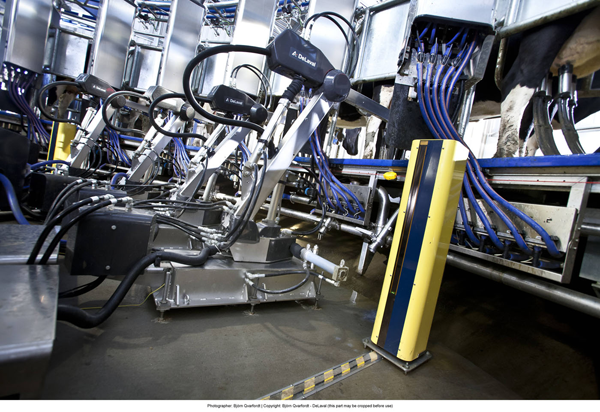



Robots are revolutionizing dairy farms, but are they worth the hefty price tag? From 15% production boosts to labor savings and lifestyle changes, we dive deep into the real-world impact of automated milking. Discover why savvy producers call these high-tech marvels “money-printing machines” in our exclusive report.

While your neighbors are still chained to twice-daily milking schedules, forward-thinking producers are letting robots handle the grunt work—boosting production by 15% while reclaiming their lives from the tyranny of the parlor clock. The global milking robots market is experiencing explosive growth as dairy producers worldwide recognize the transformative potential of automation:
| Year | Global Milking Robots Market Value | Annual Growth Rate |
| 2024 | $2.98 billion | – |
| 2025 | $3.39 billion | 14.0% |
| 2029 (projected) | $6.03 billion | 15.4% CAGR (2025-2029) |
Source: The Business Research Company, 2022
North American dairy farms are particularly bullish on automation. The regional market is expected to grow from $641.9 million in 2025 to $1,086.9 million by 2032. This report cuts through the hype to deliver the hard facts about implementing these game-changing systems, from planning through startup and beyond.
Robot Revolution: More Than Just Labor Savings
Let’s be brutally honest: labor is getting expensive and becoming impossible to find. But robotic milking systems deliver far more than relief from staffing headaches.
When a cow enters the robotic unit, she’s identified via RFID, her teats are cleaned and stimulated, and milking cups are precisely attached using laser-guided technology. This consistent, gentle process isn’t just more straightforward on cows—it’s revolutionizing production.
PRODUCER INSIGHT: “I didn’t buy robots to milk my cows. I bought robots to get my life back.” — Wisconsin dairy farmer after 2 years with robotic milking
The performance metrics of robotic systems reveal why progressive producers are making the switch:
| Metric | Value in Robotic Systems |
| Typical milkings per 24-hour period | 140-190 |
| Average milkings per cow per day | 2.4-3.0 |
| Milk output per robot per day | 4,000-5,500 pounds |
| Production vs. 2x conventional milking | 3-5% higher |
| Production vs. 3x conventional milking | 6-9% lower |
Source: Iowa State University Extension
“Robotic milking systems helped one farm increase annual milk yield from 7,000 to 9,000 liters per cow,” reports agricultural technology company Farmonaut. That’s not an incremental improvement—a transformational performance that conventional systems cannot match.
The true game-changer isn’t the robotic arm itself—it’s the wealth of data generated by these systems. Every milking event becomes a gold mine of information: conductivity readings that catch mastitis days before visible symptoms appear, rumination monitors that flag digestive issues before feed efficiency plummets, and activity trackers pinpointing optimal breeding windows with laser precision.
This isn’t just milking cows—it’s managing biological systems with unprecedented control.
The Truth About Technology Adoption
It’s not just massive operations benefiting from automation. Unlike the conventional wisdom that robotics only make sense for operations with hundreds of cows, manufacturers now offer configurations suitable for farms of all sizes.
The single-stall unit segment dominates the market because it is economical and ideal for small and mid-sized operations. Because it relies less on manual labor while improving operational efficiency, these systems are increasingly the first choice for farmers leaping automation.
It’s also worth noting that you don’t need a computer engineering degree to handle the technology. Today’s systems feature intuitive interfaces designed for farmers, not programmers. The learning curve exists but is far less steep than many producers fear.
Planning Your Robot Revolution: Critical Success Factors
The difference between robotic success stories and expensive failures isn’t farm size or milk price—it’s planning quality. The most successful implementations spend 10× longer in planning than in actual installation.
Before writing that $800,000 check for a four-robot system, ask yourself these critical questions:
What’s driving your interest in robotics? Labor savings alone rarely justify the investment. The operations seeing the fastest ROI are leveraging multiple benefit streams, as this table demonstrates:
| Factor Affecting Robot ROI | Impact Level |
| Labor cost savings | High |
| Milk production increase | High |
| Feed efficiency | Medium |
| Cow health improvements | Medium |
| Reproduction performance | Medium |
| Electricity costs | Low |
| Maintenance costs | Medium |
Based on combined data from university extension services and industry research
Does your management style match the technology? Robotic systems demand a proactive, data-driven approach. You’ll likely struggle with automation if you’re reluctant to check computer metrics daily or make decisions based on data trends.
Successful robot managers demonstrate genuine curiosity about cow behavior and continuously adjust protocols based on what the system reveals.
How will you handle the feed transition? Traditional robot systems supplement TMR with concentrate delivered during milking. This nutritional shift requires careful planning to maintain rumen health and production.
Alternatively, some innovative producers successfully implement “no-feed” approaches in their robotic facilities—a paradigm shift that eliminates the need for robot-delivered concentrate.
Facility Design: Setting the Stage for Success
Let’s talk dollars and sense: these aren’t impulse purchases at $200,000 per robot, with typical barns costing upwards of $1.4 million for a four-robot setup. But while conventional farmers balk at the price tag, savvy operators recognize these aren’t expenses—they’re wealth-generation units printing additional revenue through increased production and efficiency.
The physical layout of your robotic facility will determine its success. When retrofitting existing facilities, critical attention must be paid to cow traffic patterns, which account for approximately 50% of robotic installations. Clear, unobstructed pathways between resting, feeding, and milking areas are non-negotiable for successful voluntary milking.
For new construction, The Dairyland Initiative recommends specific design criteria for optimizing robotic performance:
- Allocate approximately 55 cows per robot with a minimum of two AMS units per pen
- Provide deep, loose bedding (preferably sand)
- Ensure a minimum of 24 inches of feed bunk space per cow
- Maintain unrestricted access to fresh feed
- Install adequate ventilation with targeted air speeds in resting areas
Producers who implement these design principles consistently report higher voluntary visits and reduced fetch rates than facilities that compromise cow comfort or traffic flow.
The “No-Feed” Revolution: Challenging Robot Orthodoxy
One of the most intriguing developments in robotic milking challenges conventional wisdom. “DeLaval has experienced the elimination of feed for cows in rotary and parlor systems over the years, and now the company has seen operations using no-feed practices in DeLaval VMS™ robotic facilities, too,” reports a recent industry publication.
INDUSTRY BREAKTHROUGH: The “no-feed” approach eliminates pellets in the robot entirely, challenging decades of conventional wisdom about what motivates cows to visit milking stations.
This approach eliminates robot-delivered concentrate entirely, simplifying nutrition management while potentially improving rumen function through consistent TMR intake. To successfully implement this strategy, DeLaval identifies four critical requirements:
- Guided traffic systems ensuring cows visit the robots based on predetermined milking permissions
- Rigorous cow training protocols, particularly for fresh heifers and newly introduced animals
- High-quality, energy-dense TMR that drives feeding motivation
- Complete commitment from farm staff and consultants to the management approach
While still emerging, this strategy represents a potential paradigm shift in how we think about motivating cows in robotic systems. It challenges the long-held belief that feed rewards are essential for voluntary milking.
The Hard Economics: Investment and Returns
The capital requirements for robotic milking and potential returns are substantial. Current costs average approximately $200,000 per robot, and a typical installation of four robots serving 240 cows represents an investment of around $800,000 for the milking units alone. The total project cost, including the price of the new barn construction, typically ranges from $1.4 to $1.6 million.
The efficiency gains with robotic systems are dramatic when comparing labor productivity:
| System Type | Milk Production per Full-Time Worker |
| Robotic Milking Systems | 2.2 million lbs |
| Conventional Parlors (similar sized herds) | 1.5 million lbs |
Source: Farm Management Records (Finbin, 2016) from Upper Midwest farms
While conventional parlors depreciate from day one, robotic systems appreciate through increased production, delivering ROI in just 7 years versus 15+ for conventional parlor upgrades.
Dairy operations transitioning from twice-daily milking to robots often realize milk yield increases of 15-20%, translating to an additional 1,500-2,000 pounds per cow annually.
Consider the annual impact for a 120-cow herd:
- 1,800 pounds additional milk per cow × 120 cows = 216,000 pounds
- At $20/cwt milk price = $43,200 additional annual revenue
- Plus, labor savings of approximately $75,000 annually
- Total benefit: $118,200 per year against initial investment
The math becomes increasingly compelling as labor costs rise and qualified workers become more challenging to find. One striking example comes from Miltrim Farms, a US operation implementing 30 box barn milking robots to automate operations. Despite adding 1,200 cows to its farm, Miltrim Farms managed to maintain the same labor force, a testimony to the efficiency gains possible with well-implemented automation.
Management Practices That Separate Winners from Losers
It’s not the robots that determine success—the management wrapped around them. The transition to robotic milking necessitates significant adjustments to herd management practices that many producers underestimate.
Excellent transition cow management becomes even more critical in robotic systems. Fresh cows that calve without issues and transition smoothly into lactation more readily adapt to voluntary milking. Pre-calving protocols that minimize metabolic disorders and promote intense lactation start paying enormous dividends in robotic barns.
Feed management at the bunk significantly impacts system performance. Consistent feed availability and quality encourage normal feeding behavior and support regular robot visits. Research indicates that automated feed push-up, running approximately 12 times daily, maximizes feed access and supports milk production.
This consistent feed availability, combined with well-mixed rations that resist sorting, helps maintain steady cow traffic patterns and optimize voluntary milking visits.
Reality Check: Is Your Herd Robot-Ready?
Let’s be brutally honest: for every robotic success story, there’s a farm that rushed installation without proper planning and is now nursing financial wounds. Before committing to automation, evaluate whether your herd has these robot-friendly characteristics:
ROBOT READINESS CHECKLIST: To thrive in automated systems, your herd needs healthy feet and legs, low mastitis prevalence, consistent reproduction, an adaptable temperament, and sound nutritional status.
If your herd struggles in these areas, address these fundamentals before investing in robots. While the technology amplifies good management, it can’t compensate for poor foundation herd health.
The Future: Beyond Milking
The robots milking your cows today are just the beginning. Tomorrow’s integrated systems will connect milking data with automated feeding, breeding timing, and health interventions—creating biological efficiency impossible in conventional systems.
The rapidly evolving technological landscape promises continuous improvements in robotic capabilities. Artificial intelligence and machine learning advances enable increasingly sophisticated analyses of cow behavior patterns, variations in milk composition, and system performance metrics.
These capabilities support more precise individual cow management, earlier detection of health issues, and automatic optimization of system parameters.
North America is poised to remain a key hub for robotic adoption. The market is expected to grow at a steady 7.8% CAGR through 2032. This regional growth reflects the mature dairy infrastructure and the increasing pressure on operations to address labor challenges while improving efficiency.
Conclusion: Making the Leap
Implementing robotic milking technology represents a transformative journey beyond equipment installation. Success requires thoughtful planning, appropriate facility design, effective startup procedures, and ongoing management adaptations.
While the initial investment is substantial, the potential returns—including increased production, improved cow welfare, enhanced data availability, and greater lifestyle flexibility—make robotic milking an increasingly attractive option for dairy producers with the management capacity to leverage the technology effectively.
As one farmer said, “I didn’t buy robots to milk my cows. I bought robots to get my life back.” That might be the most compelling return on investment in an industry where 365-day-a-year labor demands have driven generations away from the farm.
Key Takeaways:
- Robotic milking systems can increase milk production by 15-20% compared to conventional milking.
- The global milking robots market is projected to reach $6.03 billion by 2029, growing at 15.4% CAGR.
- Successful implementation requires extensive planning, with top performers spending 10x longer planning than installing.
- Robotic systems generate valuable data for proactive herd management and health monitoring.
- Facility design is crucial, with cow traffic flow and comfort directly impacting voluntary milking success.
- The “no-feed” approach in robotic systems is challenging conventional wisdom about cow motivation.
- ROI for robotic systems can be achieved in about 7 years, compared to 15+ years for conventional parlor upgrades.
- Herd characteristics like foot health, mastitis prevalence, and temperament significantly affect robotic milking success.
- Robotic milking can dramatically improve labor efficiency, with automated systems producing 2.2 million lbs of milk per full-time worker vs. 1.5 million lbs in conventional parlors.
- Beyond milking, future integrated systems promise to revolutionize feeding, breeding, and overall herd management.
Summary
Robotic milking systems are transforming the dairy industry, offering producers significant benefits such as increased milk production (15-20%), reduced labor dependency, and enhanced herd management through data-driven insights. With the global milking robots market projected to grow to $6.03 billion by 2029, automation is becoming an essential tool for farms of all sizes. This article explores the critical factors for successful implementation, including facility design, herd readiness, and management practices, while highlighting emerging trends like “no-feed” robotic systems. Whether you’re looking to boost efficiency, improve cow welfare, or reclaim your work-life balance, robotic milking systems are reshaping what’s possible in modern dairy farming.
Learn More
- Boosting Dairy Farm Efficiency: How Robotic Milking Transforms Workflow and Reduces Labor
- Robotic Milking: Revolutionizing Farm Design, Workflow Efficiency, and Labor Demands
- Maximize Dairy Farm Efficiency: How Robots Can Cut Costs When Managed Properly
 Join the Revolution!
 Join the Revolution!
Join over 30,000 successful dairy professionals who rely on Bullvine Weekly for their competitive edge. Delivered directly to your inbox each week, our exclusive industry insights help you make smarter decisions while saving precious hours every week. Never miss critical updates on milk production trends, breakthrough technologies, and profit-boosting strategies that top producers are already implementing. Subscribe now to transform your dairy operation’s efficiency and profitability—your future success is just one click away.