








Outdated repro protocols draining profits? Double E-Synch & optimized PAG testing slash days open, boosting pregnancy rates by 30%.
Executive Summary:
Modern dairy operations can’t afford outdated reproductive strategies. The Double-Ovsynch protocol remains gold-standard for timed AI, achieving 50% pregnancy rates by addressing anovulation and optimizing cycle timing. Its emerging rival, Double E-Synch, uses estradiol to trigger follicular waves and matches fertility outcomes while offering regulatory flexibility where permitted. Meanwhile, milk PAG testing—when paired with time-dependent cut-points—enables 98% accurate pregnancy diagnosis by 28 days post-AI, slashing false positives. Together, these innovations could save a 500-cow herd over k annually by reducing days open. Producers clinging to old methods risk losing ground in today’s margin-tight industry.
Key Takeaways:
- Double E-Synch = Double-Ovsynch results: New protocol uses estradiol for follicular control, achieving 50% pregnancy rates without GnRH dependency (where legal).
- PAG testing isn’t yes/no: Time-dependent cut-points boost accuracy to 98% by day 28 post-AI, avoiding costly false positives from residual placental proteins.
- $25k/year savings potential: Reducing days open by just 5 days in a 500-cow herd boosts milk yield and cuts replacement costs dramatically.
- Anovulation matters: 42% of cows aren’t cycling post-calving—Double-Ovsynch reactivates ovaries, while E-Synch’s efficacy here needs validation.
- Test smarter, not harder: Pair early PAG screening (28d) with later ultrasound checks to catch pregnancy loss—no more waiting 45 days for answers.
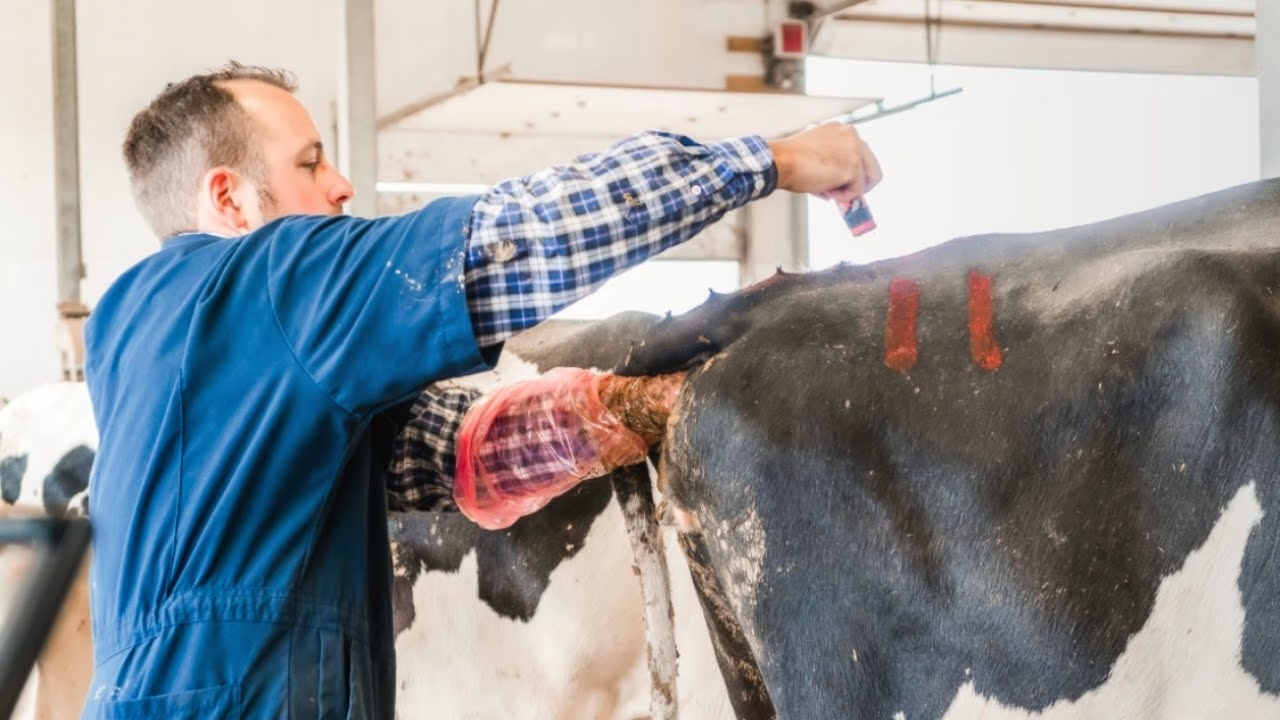
The dairy industry stands at a reproductive crossroads. While many producers cling to familiar breeding programs like their family heirlooms, cutting-edge protocols, and pregnancy diagnosis methods are redefining what’s possible for reproductive efficiency. Just as you wouldn’t run your parlor with 20-year-old equipment, your reproductive protocols shouldn’t be relics from another era. The difference between industry-standard and industry-leading approaches could be worth tens of thousands in your operation’s bottom line.
In today’s high-input dairy environment where feed costs hover near $12 per hundredweight, and replacement heifers command $1,800-2,200, reproductive inefficiency isn’t just frustrating—it’s financially devastating. Every day a cow remains open beyond your voluntary waiting period represents lost revenue that can never be recovered. At current milk prices, each additional day open costs approximately $5-7 per cow. Multiply that across your herd, and you’re looking at significant money left on the table.
Yet many producers continue to implement reproductive protocols developed decades ago, missing opportunities to leverage newer, more effective approaches. As one Wisconsin dairy producer said, “We were getting by with our old repro program, but ‘getting by’ wasn’t cutting it anymore with these tight margins.”
This investigation examines two game-changing advancements that forward-thinking producers are already implementing: the emerging Double E-Synch protocol that rivals the gold-standard Double-Ovsynch, and the optimization of milk pregnancy-associated glycoprotein (PAG) testing through time-dependent interpretation. These innovations offer a powerful framework for maximizing reproductive performance while optimizing labor and management resources.
The Evolution of Timed AI: Beyond Basic Protocols
The journey from basic heat detection to sophisticated timed artificial insemination (TAI) protocols represents one of the dairy industry’s most significant management advancements. Yet many producers remain stuck in outdated approaches, failing to capitalize on protocols specifically designed to address the physiological realities of today’s high-producing cows.
Why are so many dairy producers still using reproductive protocols designed for cows that produce half the milk of today’s animals?
Why Double-Ovsynch Became the Gold Standard
Double-Ovsynch emerged as a revolutionary advancement in reproductive management by addressing two critical challenges: postpartum anovulation and suboptimal timing of breeding protocols.
The standard Double-Ovsynch protocol spans approximately 28 days with this structure:
- Presynchronization Ovsynch:
- Day -17: First GnRH injection (Factrel®, Cystorelin®, or Fertagyl®)
- Day -10: PGF2α injection (Lutalyse®, Estrumate®, or Prostamate®)
- Day -7: Second GnRH injection
- Breeding Ovsynch:
- Day 0: Third GnRH injection
- Day 7: First PGF2α injection
- Day 8: Second PGF2α injection (often added to improve luteolysis)
- Day 9: Fourth GnRH injection
- Day 10: Timed Artificial Insemination
What makes Double-Ovsynch particularly effective is its ability to address anovulation—a condition affecting up to 42% of cows by the end of the voluntary waiting period. Think of these anovular cows as engines that haven’t turned over yet; they have the potential to run, but they need a jump start. The GnRH injections in the presynchronization phase can induce ovulation in these anovular cows, effectively initiating cyclicity and creating a corpus luteum responsive to subsequent hormonal treatments.
For already cycling cows, the presynchronization manipulates follicular development and luteal lifespan to ensure that a greater proportion of cows begin breeding Ovsynch during early diestrus (days 5-12 of the cycle), significantly improving conception rates. It’s like timing your corn planting by calendar date and soil temperature, moisture levels, and weather forecast—you’re setting up optimal conditions for success.
The results speak for themselves. Research has consistently shown Double-Ovsynch achieving pregnancy per AI (P/AI) rates of approximately 50% versus 42% for Presynch-Ovsynch, with the advantage often being particularly pronounced in first-lactation animals. One Pennsylvania dairy producer noted, “When we switched to Double-Ovsynch for our first lactation cows, our conception rates jumped eight percentage points almost overnight.”
The Double E-Synch Revolution: Equal Results Through Different Mechanisms
While Double-Ovsynch has reigned supreme in many progressive dairies, an emerging protocol called Double E-Synch is challenging its dominance. According to recent research, this protocol produces “similar ovarian dynamics, synchronization, and fertility as Double-Ovsynch” while utilizing a different hormonal approach.
Double E-Synch incorporates estradiol compounds in place of specific GnRH injections in the traditional Double-Ovsynch framework. The configuration involves:
- Presynch with P4/E2: Starting with a used progesterone insert on day -17, which is removed on day -10, along with PGF2α and estradiol cypionate (ECP)
- Breeding synch with P4/E2: Starting with double-dose GnRH and a new progesterone insert on day 0, followed by PGF2α on day 7, then progesterone insert removal with PGF2α and ECP on day 8, and finally TAI on day 10
The fundamental action differs significantly. While GnRH primarily induces ovulation or luteinization of mature follicles, estradiol can cause the emergence of a new follicular wave regardless of the dominant follicle’s size. This creates an alternative physiological mechanism for controlling follicular development and ovulation timing.
It’s like how you might approach getting your TMR mixer started on a cold winter morning—you could either directly engage the starter (like GnRH forcing ovulation), or you could use the glow plugs first to warm things up (like estradiol preparing the follicular environment). Both approaches get the job done, but they work through different mechanisms.
Double-Ovsynch vs. Double E-Synch Protocol Comparison
| Feature | Double-Ovsynch | Double E-Synch |
| Structure | Presynch Ovsynch + Breeding Ovsynch | Presynch phase + Breeding Synch phase with estradiol |
| Key Hormones | GnRH, PGF2α | GnRH, PGF2α, Estradiol cypionate (ECP) |
| Ovulation Trigger | GnRH-induced LH surge | Estradiol-induced follicular wave emergence |
| Fertility (P/AI) | 49.7% overall (54.9% primiparous, 38.5% multiparous) | Like Double-Ovsynch (study title) |
| Anovulation Management | Corrects anovular cows | Efficacy in anovular cows requires validation |
| Regulatory Status | Globally accepted | Banned in EU; restricted in some regions |
| Ideal For | High-producing herds with anovulation issues | Farms needing GnRH alternatives (where legal) |
What This Means for Your Operation
The emergence of Double E-Synch as a viable alternative to Double-Ovsynch creates new strategic options for dairy producers. Here’s what you should consider when evaluating these protocols:
- Regulatory Environment: The use of estradiol is restricted or banned in some regions (e.g., the European Union). This automatically precludes the use of protocols like Double E-Synch in those areas.
- Herd Demographics: Double-Ovsynch’s proven ability to manage anovulation makes it particularly valuable in herds with a higher prevalence of this condition, especially in high-producing cows or during heat stress. If your 30,000-pound herd struggles with getting fresh cows cycling, Double-Ovsynch might be your better option.
- Protocol Compliance: Both protocols require strict adherence to schedules and multiple animal handlings. Your farm’s labor availability, record-keeping systems, and ability to comply with complex protocols should influence your decision. As one dairy manager said, “A protocol is only as good as your ability to execute it consistently.”
- Hormone Costs: The relative costs of GnRH, PGF2α, and estradiol compounds vary across regions and can significantly impact the economic equation. A complete Double-Ovsynch protocol costs approximately $15-20 per cow in hormone expenses alone.
- Individual Cow Factors: Recent research suggests that certain subpopulations of cows might respond differently to various protocols. A 2024 study found that Double-Ovsynch can effectively reduce the incidence of follicular cysts and inactive ovaries compared to Presynch-Ovsynch but does not affect the incidence of luteal cysts.
The Pregnancy Diagnosis Revolution: Moving Beyond Basic PAG Testing
While advancing your breeding protocol is essential, optimizing pregnancy diagnosis is equally important. The industry has gradually shifted from relying solely on rectal palpation toward incorporating technologies like ultrasound and milk pregnancy-associated glycoprotein (PAG) testing. However, many producers fail to maximize these tools’ value through strategic implementation and interpretation.
Let’s be honest: Are you still treating PAG testing like a simple yes/no test when it’s a sophisticated diagnostic tool requiring nuanced interpretation?
Why PAGs Matter and How They’re Changing the Game
PAGs are glycoproteins explicitly produced by the trophectoderm (the outer layer of the developing embryo) in pregnant cows. These proteins cross into maternal circulation and eventually into milk, creating a pregnancy-specific marker that can be detected through laboratory testing.
The convenience of milk PAG testing is compelling samples can be collected during routine DHIA testing without additional animal handling. However, many producers don’t realize that interpreting these tests isn’t as simple as “pregnant” or “open.”
The Critical Factor You’re Probably Missing: Time-Dependent Cut-Points
What most dairy producers don’t understand about PAG testing is that using a single interpretation threshold across all testing scenarios significantly compromises accuracy.
The challenge lies in PAG dynamics. In early pregnancy (days 25-30 post-AI), PAG levels are relatively low and may overlap with residual PAG levels from a previous pregnancy. As pregnancy progresses, PAG levels rise substantially. Therefore, a higher threshold can be used for samples collected later (e.g., >35-40 days post-AI) to confidently distinguish pregnant from non-pregnant cows. In comparison, a lower threshold is necessary for earlier testing.
It’s like how you’d adjust your somatic cell count intervention threshold based on the stage of lactation or season—one size doesn’t fit all situations. Just as you wouldn’t use the same mastitis treatment protocol for a fresh cow and a late-lactation cow, you shouldn’t use the same interpretation threshold for PAG tests across all testing scenarios.
The dairy industry’s failure to embrace time-dependent cut-points for PAG testing costs producers millions in delayed rebreeding and extended days open.
Recent research has demonstrated that implementing time-dependent cut-points—different interpretation thresholds based on post—d—insemination days— improves diagnostic accuracy. This approach allows for:
- Earlier Testing: Reliable results closer to day 28 post-AI, facilitating quicker identification of open cows
- Improved Accuracy: Higher sensitivity and specificity across different testing intervals
- Reduced False Positives: Particularly important when testing relatively soon after calving, as higher cut-points at later stages help filter out cows with lingering PAGs from previous pregnancies
Milk PAG Testing Optimization Guidelines
| Days post-AI | Recommended Cut-Point (S/P Ratio) | Sensitivity | Specificity | Key Considerations |
| 25 | Not recommended | Low | Low | Too early for reliable results |
| 28-32 | Manufacturer specific | >98% | High | Optimal early testing window |
| 32-39 | Manufacturer specific | >98% | Highest | Peak PAG levels, best testing period |
| 46-67 | Higher threshold needed | Variable | Variable | PAG nadir period, avoid testing |
| 74+ | Manufacturer specific | High | High | Rebounding PAG levels are good for a recheck |
Key: S/P Ratio = Sample-to-Positive control ratio
A study evaluating milk PAG tests found excellent accuracy when testing on day 32 post-insemination, with pregnant outcomes exceeding 98% for cows that maintained pregnancy.
Factors That Influence Your PAG Results
To maximize the value of milk PAG testing, you must consider several factors beyond the test result itself:
- Days Post-Insemination (DIM): Testing before day 28 significantly increases the risk of false negatives. Aim for ≥28 days post-AI for optimal results.
- Days Postpartum (DPP): Due to PAG persistence, testing too soon after calving increases the risk of false positives. Wait >60-70 days postpartum for the first test after calving. This is like how you’d wait for a certain DIM before running a Cow-Side Ketosis test—timing matters for accurate results.
- Embryonic/Fetal Mortality: A positive PAG test confirms the presence of placental tissue during sampling. Pregnancy loss after sampling but before later confirmation can occur, with loss rates highest early in gestation. Think of it like checking a corn seedling emergence—confirmation of emergence doesn’t guarantee the plant will make it to harvest.
- Individual Cow Variation: Natural variation exists in PAG production and clearance rates between cows, just as milk production and component levels vary between individuals.
- Milk Sample Quality: Proper collection, handling, and storage are essential for accurate results. Just as with component testing, contaminated samples lead to unreliable results.
Integrating Advanced Protocols with Strategic PAG Testing: A Winning Combination
The real power comes from integrating these advanced approaches into a comprehensive reproductive management strategy. Here’s how progressive producers are combining these technologies:
The Advanced Reproductive Management Framework
- Strategic Protocol Selection: Choose Double-Ovsynch and Double E-Synch based on your herd’s needs, regulatory environment, and available resources. Consider targeted use for specific cow populations (primiparous vs. multiparous, anovular cows, etc.).
- Rapid Pregnancy Diagnosis: Implement milk PAG testing with time-dependent cut-point interpretation at optimal timing (≥28 days post-AI, ≥70 days postpartum for first test after calving) to quickly identify non-pregnant cows.
- Prompt Rebreeding: Rapidly re-enroll non-pregnant cows in appropriate TAI protocols or monitor for natural estrus, depending on your farm’s strategy. Just as you wouldn’t let a pen sit empty between groups of heifers, you shouldn’t let reproductive days go to waste.
- Ongoing Monitoring: Regularly evaluate reproductive performance metrics (conception rate, pregnancy rate, days open) to assess program effectiveness and adjust as needed. As the saying goes in dairy farming: “If you’re not measuring it, you’re not managing it.”
The Economic Impact: Dollars and Sense
While implementing advanced reproductive protocols and optimized pregnancy diagnosis involves costs for hormones, laboratory services, and labor, these investments typically yield substantial returns:
- Reduced Days Open: Earlier pregnancy diagnosis and improved conception rates directly reduce days open, increasing lifetime milk production and reducing replacement costs. Reducing days open by just 10 days across a 500-cow herd at current milk prices could mean an additional $25,000-35,000 in annual revenue.
- Improved Labor Efficiency: TAI protocols reduce the labor required for heat detection, while milk PAG testing can be integrated with routine DHIA sampling, minimizing additional handling requirements. One Michigan dairy producer noted: “We spent 45 minutes twice daily watching for heats. Now that time goes to other priorities.”
- Enhanced Decision-Making: Faster identification of non-pregnant cows allows for more timely management decisions regarding rebreeding or culling, optimizing herd productivity. It’s like knowing which fields need replanting immediately after a washout versus waiting weeks to assess the damage.
For a 500-cow dairy, reducing days open by just 5 days through these advanced approaches could represent over $25,000 in additional annual profit through increased milk production and reduced replacement costs.
Are you willing to leave that kind of money on the table by sticking with outdated reproductive management approaches?
Practical Implementation: Making It Work on Your Farm
Transitioning to advanced reproductive protocols and optimized pregnancy diagnosis requires careful planning and execution. Here’s a practical roadmap:
For Protocol Implementation:
- Consult Your Veterinarian: Work with your herd veterinarian to evaluate which protocol best suits your operation’s needs and constraints. As one veterinarian said, “The best protocol is the one that gets implemented correctly on your farm.”
- Train Your Team: Ensure all staff involved in reproductive management understand the protocol schedule and the importance of timing. Consider creating laminated protocol cards for the treatment area and holding brief weekly meetings to review upcoming treatments.
- Establish Clear Records: Implement robust record-keeping systems to track protocol compliance and outcomes. Proper data entry is essential if you’re using DairyComp, PCDart, or another system.
- Start with a Subset: Consider initially implementing the new protocol with a subset of cows to work out any logistical challenges before full implementation. Many farms start with first-lactation animals or a particular pen.
For Optimized PAG Testing:
- Partner with the Right Laboratory: Choose a laboratory that offers time-dependent cut-point interpretation for milk PAG testing. Ask your DHIA technician or milk tester about available options.
- Maintain Accurate Breeding Records: Ensure precise recording of AI dates to enable proper interpretation of PAG results. Garbage in, garbage out—inaccurate breeding dates lead to misinterpreted test results.
- Develop a Testing Schedule: Establish a regular testing schedule that aligns with your herd’s breeding program and management practices. Many farms coordinate with their monthly DHIA test day.
- Integrate with Other Methods: Consider combining milk PAG testing with strategic ultrasound examinations for comprehensive reproductive management. For example, PAG can be used for initial screening, and ultrasound for confirmation and fetal sexing.
The Bottom Line: Embrace Innovation or Fall Behind
The dairy industry continues consolidating, with efficient operators expanding while less efficient ones exiting. Reproductive performance remains one of the most significant differentiators between profitable and struggling operations.
Combining advanced TAI protocols like Double-Ovsynch or Double E-Synch with optimized milk PAG testing represents a powerful framework for maximizing reproductive efficiency. Progressive producers who implement these technologies strategically are achieving pregnancy rates that would have seemed impossible a decade ago pushing 30% or higher compared to the 15-18% that was once considered acceptable.
The question isn’t whether you can afford to implement these advanced reproductive strategies—it’s whether you can afford not to. As one Pennsylvania dairy producer said, “When corn is $6 a bushel, and milk is $20 a hundredweight, reproductive efficiency isn’t just about more calves and more milk—it’s about survival.”
Are you still using yesterday’s reproductive management approaches to address today’s challenges? If so, it’s time to reconsider. The science is clear, the economics compelling, and the competitive advantage undeniable. The future of dairy reproduction is here—the only question is whether you’ll be part of it.
Act now: Schedule a meeting with your veterinarian this week to evaluate your current reproductive protocols against these advanced approaches. Calculate your current days open and pregnancy rate, then project the financial impact of a 5-10% improvement. The numbers will likely convince you that upgrading your reproductive management isn’t just smart—essential for survival in today’s dairy industry.
This article was developed based on the latest dairy reproductive management research, including Double-Ovsynch, Double E-Synch, and optimized milk PAG testing. For specific protocol implementation guidance, consult your herd veterinarian to develop a program tailored to your operation’s unique needs and constraints.
Learn more:
- Preventing Poor Fertility and Pregnancy Losses in Older Dairy Cows: Maximize Dairy Farm Profitability
Discover how advanced timed A.I. protocols like Double Ovsynch and Presynch-11/Ovsynch can boost conception rates and reduce pregnancy losses in multiparous cows. - Should Dairy Farmers Perform Ultrasounds on Their Own Cows?
Explore the pros and cons of on-farm ultrasound for pregnancy diagnosis and reproductive management, and how it compares to other detection methods. - Maximizing Dairy Cow Fertility Through Genetic Selection: Current Strategies and Future Directions
Learn how genomic testing and strategic breeding can complement reproductive protocols to further improve herd fertility and profitability.
 Join the Revolution!
 Join the Revolution!
Join over 30,000 successful dairy professionals who rely on Bullvine Weekly for their competitive edge. Delivered directly to your inbox each week, our exclusive industry insights help you make smarter decisions while saving precious hours every week. Never miss critical updates on milk production trends, breakthrough technologies, and profit-boosting strategies that top producers are already implementing. Subscribe now to transform your dairy operation’s efficiency and profitability—your future success is just one click away.





