Archive for dairy automation ROI

Ohio State Just Torched Their Safety Net for a $6.2 Million Robot Bet – Are They Crazy or Geniuses?

Universities aren’t training farmers anymore—they’re training corporate tech reps.
Robotic milking systems, dairy automation ROI, dairy labor shortage, future of dairy farming, university dairy programs

When a major university bulldozes perfectly good dairy facilities to go all-in on automation, you know something big is happening. The question is: are they seeing the future, or about to become a very expensive cautionary tale?

You know how conversations go at the feed mill—somebody always brings up the latest university nonsense. But Ohio State’s new robot dairy? That’s got producers talking from Defiance County clear down to Washington County.

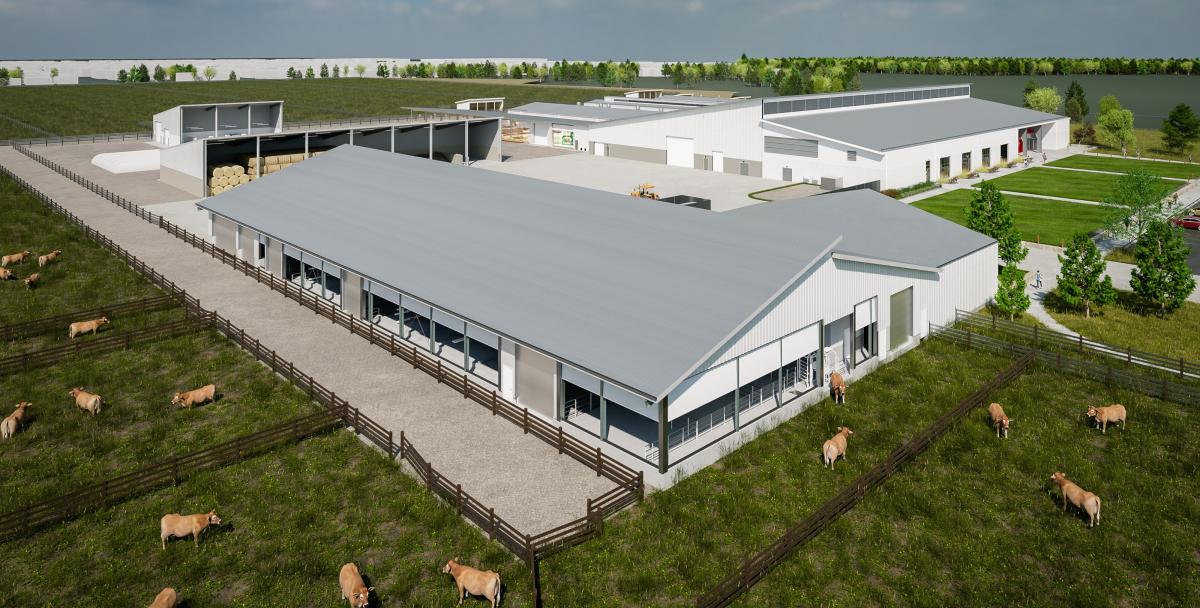
Here’s what happened. They took their 110 registered Jerseys—the same herd that’s been training students since Nixon’s day—bulldozed those trusty but tired 1972 facilities, and dropped a whopping $6.2 million on what they’re calling a “fully autonomous dairy operation”.

That’s not small potatoes for a 60-cow setup.

Here’s Why This Isn’t Just Another Equipment Upgrade

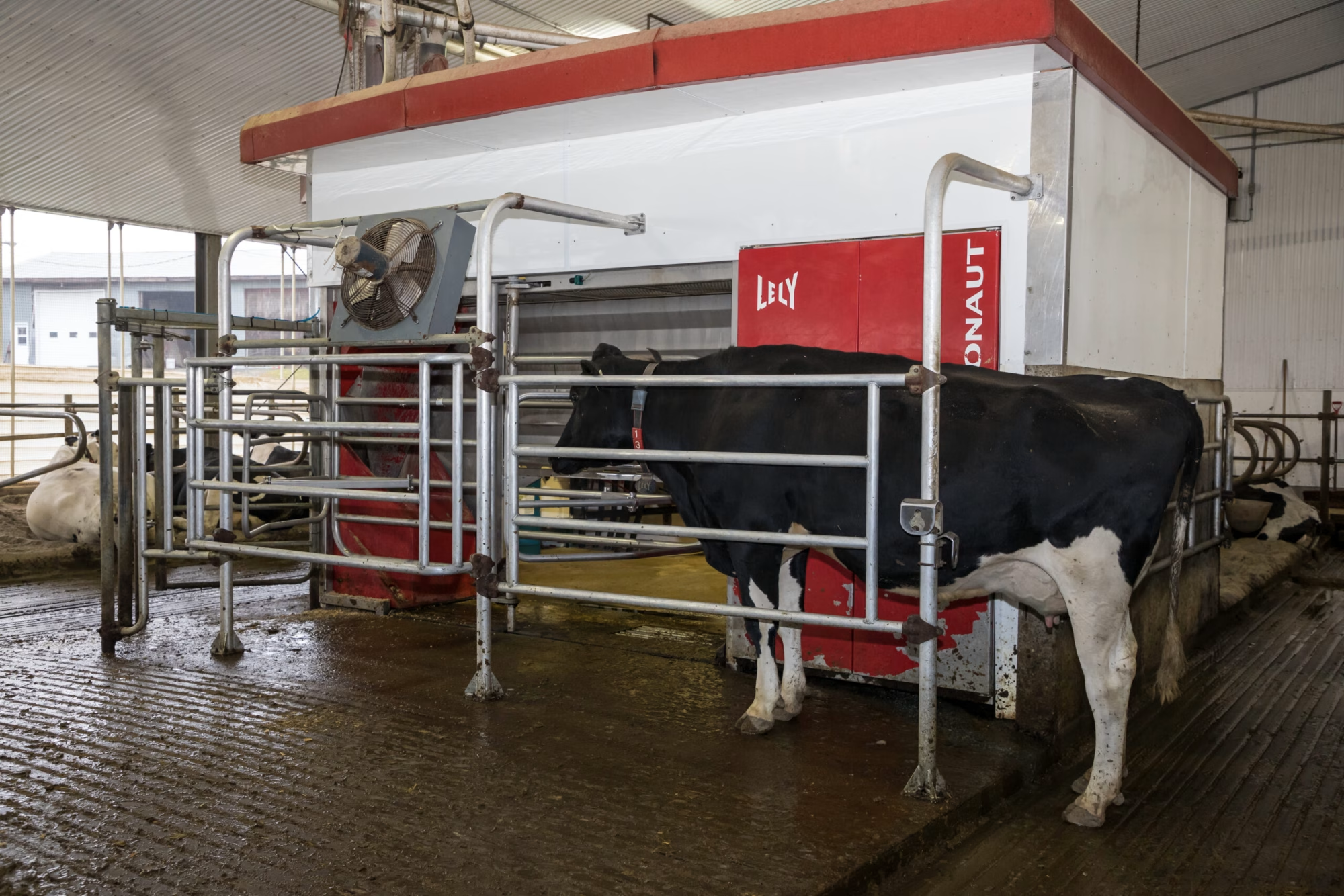
They didn’t renovate. They didn’t hedge their bets. Ohio State went full nuclear option—demolished everything and built from scratch with two Lely Astronaut A5 robots, a Vector automated feeding system, robotic manure vacuums… the whole nine yards.

Most rational folks would’ve spent the smaller money patching up the old place while adding some robot experience. Keep both conventional and automated training. But no—Ohio State torched their safety net completely.

“It would be more cost-effective to tear down the outdated structure,” Associate Dean Graham Cochran explained. But any producer who’s priced farm construction knows that math only works if you’re trying to make retreat impossible.

The gamble? That robotic milking explodes from niche curiosity to mainstream necessity before their current students graduate and discover that 97% of dairies still milk the old-fashioned way.

The Numbers Tell a Brutal Story

Let’s talk reality. Currently, fewer than 3% of US operations utilize robotic milking. We’re talking maybe 800 robot dairies out of 26,000+ total operations nationwide. That’s not exactly a revolution sweeping the countryside.

The economics are tough. A comprehensive study tracking operations across 13 countries found that robots cut labor input by 28%, which sounds great, but also increases investment costs by 58%. The real kicker? Only 6% of producers achieved payback periods under 12 years.

Those aren’t adoption-driving numbers for an industry where most operations run on margins thinner than skim milk.

But here’s where it gets interesting… maybe Ohio State sees something in the labor crisis that changes this whole equation.

The Immigration Time Bomb Nobody Wants to Discuss

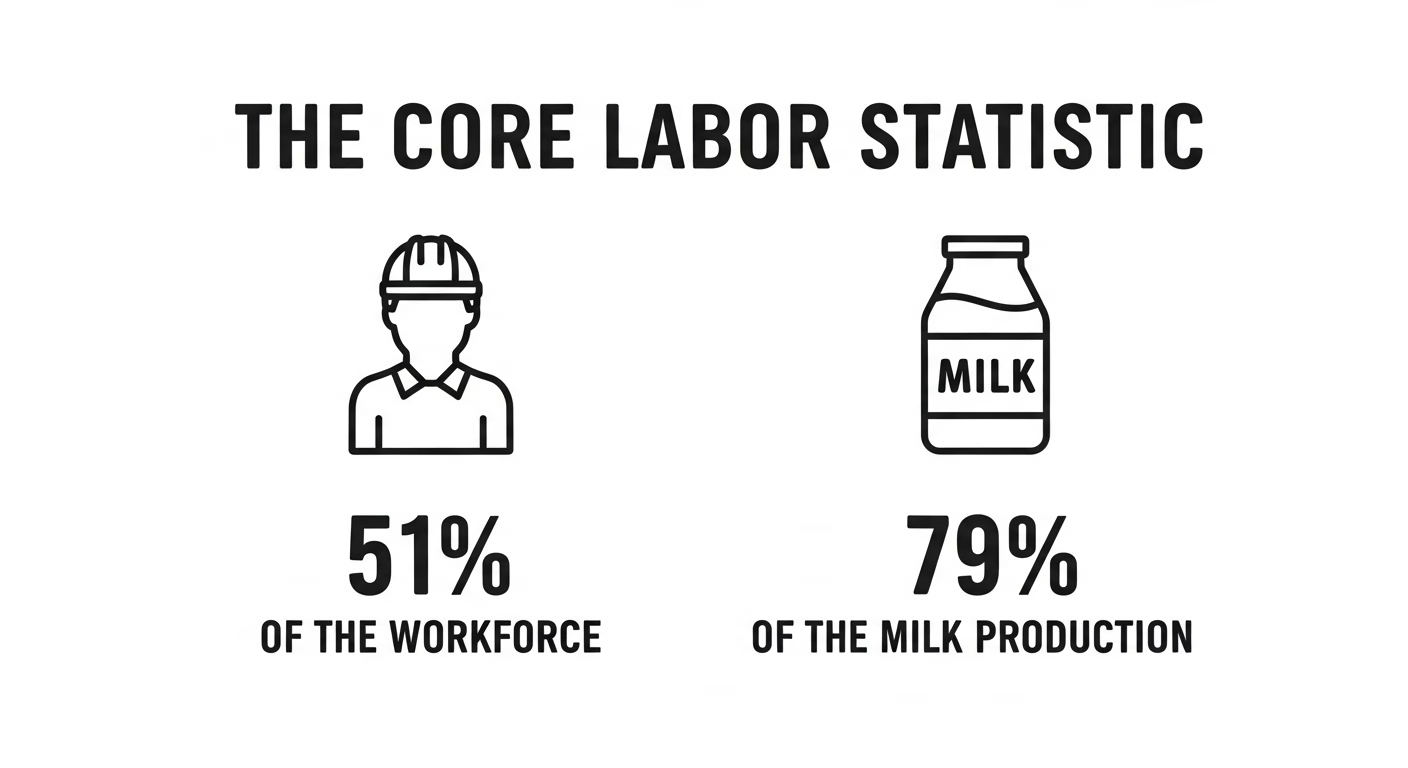
Our industry runs on immigrant workers—51% of the workforce producing 79% of America’s milk. With current deportation pressures and policy uncertainty, that labor foundation isn’t just shaking—it’s cracking.

Now, Ohio’s different from those California mega-dairies. Our 1,350 farms average 185 cows each—mostly family operations with seasonal help rather than year-round immigrant crews. Different labor dynamics entirely.

But even family farms are feeling the squeeze. Operations nationwide are dealing with 30-38% annual employee turnover. That’s not just expensive recruitment costs—it translates to production drops and higher calf mortality when your crew keeps changing.

Scott Higgins from the Ohio Dairy Producers Association told me: “It is exciting to see this investment in a modern dairy that will impact the student experience and tell the story of dairy farming”. But between the lines, you can hear the concern about workforce stability.

If immigration policy suddenly removes a significant portion of the 51% dairy workforce, automation stops looking like a nice-to-have technology. It starts looking like survival equipment.

The Real Shocker: They’re Not Training Farmers

This development caught me completely off guard when I started digging deeper.

Ohio State isn’t training the next generation of dairy farmers or farm managers. They’re training corporate employees for the agricultural technology sector.

Think about the economics. Their graduates will likely command competitive starting salaries that could price them out of most actual farm management positions. A typical 200-cow operation in Ohio can’t afford to pay premium wages when the whole operation might only net $100,000-150,000 annually.

But equipment companies? They desperately need technical support reps, installation crews, and customer training specialists. Lely already runs comprehensive training centers offering “complete working knowledge of robots and feeding products”.

Jason Hartschuh from Ohio State Extension put it this way: “The new facility will allow students to be ready for a career in the dairy industry in all sectors, from farm management to sales and service”. Notice how “sales and service” got equal billing with “farm management.”

The Corporate Training Competition They’re Ignoring

Here’s where Ohio State’s strategy gets really questionable, and honestly, nobody’s talking about this elephant in the room.

When a producer installs robotic equipment, manufacturers provide free training “for as long as you own and operate” their systems. Lely’s got dedicated training facilities. GEA partners with major universities. These corporate programs deliver hands-on equipment access, immediate updates when software changes, and commercial incentives for customer success—because if you fail, they lose future sales.

So what exactly does a four-year Ohio State degree add that manufacturer training doesn’t provide better, faster, and cheaper?

The Lely Vector system Ohio State installed saves customers about 8 hours of weekly labor plus up to 1,452 gallons of diesel annually, according to multiple documented case studies. However, producers learn system optimization through manufacturer support and their neighbors’ experience, rather than university coursework.

The Jersey Factor That’s Got Me Scratching My Head

Here’s something that’s been bugging me about Ohio State’s approach…

Industry observations suggest that Jerseys present different challenges for robotic systems—smaller frame sizes, varied udder configurations, and higher component milk — that can affect sensor performance differently than Holstein-focused automation development.

Most Ohio producers run 100-300 cows—potentially too small for multiple robots but too large for optimal single-robot economics. So Ohio State is training students for a facility design that exists on maybe a few dozen farms nationwide.

That’s… interesting strategic thinking.

Research Goldmine or Corporate Welfare Program?

Ohio State supporters keep pointing to research potential, and I’ll admit, something is compelling here.

Their individual cow monitoring systems will generate data streams that conventional operations literally cannot produce: real-time milk composition analysis, continuous health tracking, and precise feed intake measurements down to individual animals.

Maurice Eastridge from Animal Sciences says this will be “a tremendous asset” for research. If automation adoption accelerates, their faculty could become the go-to licensing experts for breakthrough insights worldwide.

But here’s what makes me uncomfortable: Lely owns the core technology generating this data. Ohio State is essentially providing research services that benefit equipment manufacturers while using American taxpayer funds.

This conflicts with what land-grant universities were created to achieve. The Morrill Act of 1862 established these institutions to make agricultural knowledge freely available to all farmers. Now they’re positioning to license discoveries, creating a two-tiered system where technological advantages go to whoever can afford premium prices.

What This Actually Means for Working Producers

The thing about Ohio State’s gamble is that it’s going to tell us something important about where this industry is heading, whether they succeed or fail spectacularly.

Technology Timing Intelligence: Their willingness to stake their entire program on automation acceleration suggests some industry leaders expect much faster adoption than public projections indicate. That’s worth monitoring as market intelligence—they might know something about policy changes or economic pressures that haven’t hit the news yet.

Training Source Strategy: When you’re evaluating robotic systems, prioritize manufacturer training and peer producer experience over academic credentials. The company selling you equipment has much stronger commercial incentives for your operational success than any university program.

Labor Reality Check: Focus on systems that enhance your current crew’s productivity rather than requiring completely different skill sets. Automation isn’t about replacing experienced managers—it’s about making reliable help more productive and reducing dependence on hard-to-find manual labor.

Economic Calculations: That international study showing 28% labor reduction but 58% higher investment costs suggests most operations aren’t economically ready for this leap yet. But if immigration policy shifts suddenly removes available workers, those calculations flip overnight.

The Bottom Line

Ohio State just demonstrated that even major agricultural institutions are making unprecedented bets on industry transformation. Whether that represents visionary leadership or an expensive miscalculation will signal whether dairy automation moves from niche curiosity to mainstream necessity.

Their success or failure offers valuable intelligence about industry direction, but here’s what concerns me: they’re essentially experimenting using students’ career prospects and taxpayer funding to test theories about automation timing.

If they’re right about acceleration, their graduates become valuable professionals in a growing sector. Their research drives industry transformation. Their facility becomes the model others follow.

If they’re wrong… well, they’ve trained students for jobs that don’t exist while abandoning the 97% of operations that still need competent managers who understand actual dairy work.

The revolution might indeed be coming. But it’s being driven by equipment manufacturers solving real problems for working producers, not universities training corporate employees.

For family operations trying to stay competitive, that distinction makes all the difference. The question isn’t whether Ohio State’s bet pays off for them—it’s whether their gamble helps or hurts the actual dairy farmers who are supposed to benefit from land-grant education.

That verdict is still several years away. But watching their results will tell us whether we’re witnessing the future of dairy education… or an expensive institutional mistake that forgot who it’s supposed to serve.

Either way, the dice are rolling, and the stakes couldn’t be higher for all of us trying to make a living in this business.

Key Takeaways

  • Labor math is changing fast: With 51% immigrant workforce at risk and 30-38% annual turnover crushing production, automation stops being a luxury and starts being survival gear (Source: National dairy workforce analysis, 2025)
  • ROI reality check: Robots slash labor 28% but spike investment 58%—crunch your numbers hard before jumping, because payback often stretches past 10 years (International meta-analysis, 13 countries)
  • Small wins add up: Lely’s Vector feeding system saves 8 hours weekly labor plus 1,452 gallons of diesel annually—not sexy, but that’s $3,000+ yearly on a 200-cow operation (Company performance data, 2025)
  • Training trumps degrees: Skip the classroom, stick with manufacturer programs and neighbor networks—companies like Lely offer lifetime training with equipment purchase, no tuition required (Industry intelligence)
  • Size matters for automation: Ohio State’s 60-cow Jersey setup is rare; most Midwest operations (100-300 cows) sit in automation’s awkward middle ground—too big for one robot, too small for multiples (Ohio dairy demographics, 2025)

Executive Summary:

Ohio State just torched their safety net—dropping $6.2 million on a fully robotic dairy while demolishing perfectly good conventional facilities. Here’s what’s wild: only 3% of US farms use robot milkers, yet they’re betting everything on automation. With immigrant workers making up 51% of dairy labor, producing 79% of our milk, and immigration crackdowns tightening the screws, maybe they see something we’re missing. But the math’s brutal—robots cut labor 28% while jacking costs up 58%, with most farms waiting over a decade for payback. We dug deep into Ohio State’s gamble, the labor crisis driving it, and what it means for your operation. Bottom line: automation isn’t coming someday—it’s here, and you need a strategy now.

Complete references and supporting documentation are available upon request by contacting the editorial team at editor@thebullvine.com.

Learn More:

Join the Revolution!

Join over 30,000 successful dairy professionals who rely on Bullvine Weekly for their competitive edge. Delivered directly to your inbox each week, our exclusive industry insights help you make smarter decisions while saving precious hours every week. Never miss critical updates on milk production trends, breakthrough technologies, and profit-boosting strategies that top producers are already implementing. Subscribe now to transform your dairy operation’s efficiency and profitability—your future success is just one click away.

NewsSubscribe
First
Last
Consent

No Amnesty for Ag Workers – Washington Just Threw a Wrench in Dairy Labor

51% of dairy workers produce 79% of our milk – but Washington just changed the rules. Your automation ROI just got a lot more interesting.

EXECUTIVE SUMMARY: You know that gut feeling you’ve had about your labor situation? Well, it just got validated in the worst way possible. Washington’s “no amnesty” stance isn’t just policy talk—it’s about to reshape how every dairy operation thinks about their workforce and technology investments. Here’s what caught my attention: robotic milking systems that used to pencil out over 4-5 years are now showing 24-month paybacks under current labor market conditions. We’re talking about 21% labor cost reductions while some operations are seeing 8.9% production growth in states that still have reliable labor access. The producers who are already documenting their workforce and running new automation numbers aren’t just planning for 2026—they’re positioning themselves to dominate their local markets while their neighbors scramble to find milkers. This isn’t about replacing good people… it’s about creating systems that can thrive regardless of what Washington decides next.

KEY TAKEAWAYS

  • Cut labor costs 21% with strategic automation – Robotic milking systems showing 24-month payback periods under current crisis conditions. Start documenting your recruitment costs, turnover expenses, and wage inflation now to run accurate ROI calculations.
  • Workforce retention beats replacement every time – Operations implementing comprehensive benefit packages (including housing assistance) report turnover rates below 5% versus industry averages of 40%. This translates to $89,000 in avoided losses for a 1,000-cow operation.
  • Regional advantages are widening fast – Texas dairy operations showing 8.9% annual production growth while traditional dairy states face declining output. With Class III at $18.82/cwt and feed costs at $285/ton, your zip code is becoming your destiny.
  • Document everything before you need it – Smart producers are formalizing HR processes and tracking worker histories now. When policy changes hit, the farms with proper documentation will have options while others face operational disruption.
  • Technology adoption requires people strategy – Activity monitoring systems generating 3:1 ROI, but only when you’ve got skilled staff who can interpret the data. Cross-training and systematic workforce development are showing better returns than many technology investments.
dairy labor shortage, robotic milking systems, dairy automation ROI, workforce retention strategies, dairy farm efficiency

You know what keeps me up at night lately? It’s not milk prices or feed costs, though those are gnawing at everyone. It’s this labor situation that’s about to reshape how we all do business.

The thing about Trump’s latest immigration stance is that it’s not just policy talk anymore. When the administration says “no amnesty” for ag workers while immigrant labor makes up 51% of our workforce but produces 79% of our milk… well, that’s your wake-up call right there. We’re talking about the backbone of American dairy production sitting in regulatory limbo.

What really gets me is how disconnected Washington seems from what’s happening in the milking parlor at 4 AM. But here’s the thing—we can’t wait for politicians to figure this out. The smart money is already moving, and if you’re not thinking three moves ahead, you’re going to get left behind.

The Backbone of the Industry: Immigrant labor represents just over half the dairy workforce but is responsible for a hugely disproportionate 79% of U.S. milk production, according to industry data.

The Policy Reality Check—And Why Your Morning Crew Matters More Than Ever

Agriculture Secretary Brooke Rollins dropped this gem in July: “34 million able-bodied adults in our Medicaid program” could fill farm jobs. I’ve been in this business long enough to know when someone’s never spent a morning in a dairy barn. Michael Marsh from the National Council of Agricultural Employers nailed it: “I just can’t imagine somebody from New York City wanting to take a job in upstate New York to milk a cow.”

That’s the disconnect we’re dealing with. Policy makers who think labor is interchangeable… like you can just swap out a skilled milker who knows your herd for someone who’s never seen a fresh cow.

The administration’s “temporary pass” program? Still completely undefined. Labor Secretary Lori Chavez-DeRemer announced a new Department of Labor agricultural office, but honestly, that’s bureaucratic speak for “we’re still figuring this out.” Try planning your 2026 budget with that kind of clarity.

Here’s what’s really happening, though, and this is where it gets interesting for those of us actually running operations…

The Numbers Game—And Why Geography Is Becoming Destiny

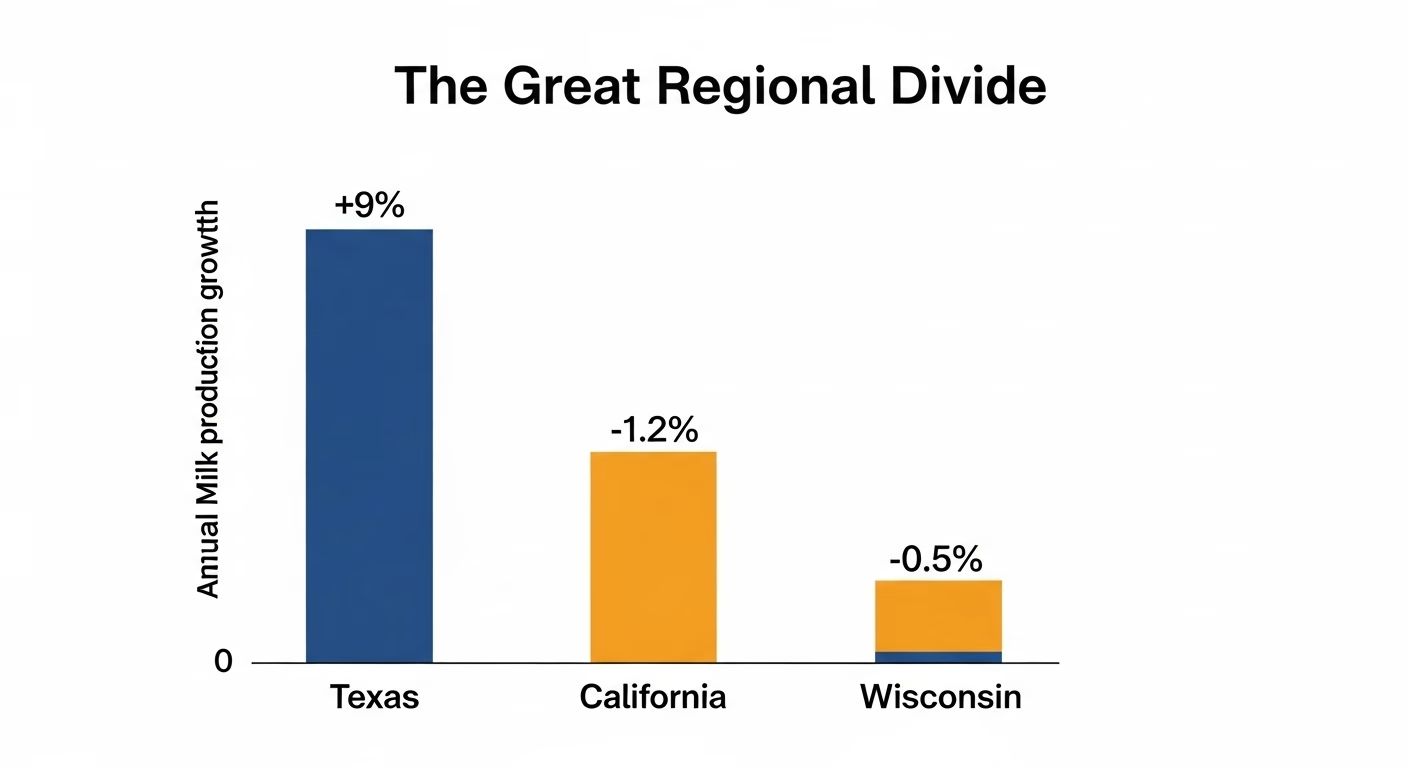
A Widening Gap: Annual Milk Production Growth (%). Recent data highlights a stark regional divide. States with more stable labor access like Texas are seeing significant growth, while traditional dairy states are feeling the pressure from workforce disruptions.

Let’s talk about what this means for your bottom line, because the regional differences are getting stark. Wisconsin’s sitting on 2,800 H-2A workers for seasonal work, but dairy? We’re locked out because the program only covers “temporary or seasonal” work. Try explaining that to a cow that needs milking 365 days a year.

The University of Wisconsin-Madison folks have documented that about 70% of Wisconsin’s dairy workforce comes from immigrant labor. That’s roughly 10,000 workers in Wisconsin alone. Now imagine what happens if enforcement ramps up…

I was just talking to a producer in Fond du Lac County who’s been milking 800 head for fifteen years. Same crew, same routine, same quality. He told me, “Andrew, I don’t know what I’d do if I lost even two of my key guys.” That’s the reality we’re dealing with.

California’s already feeling the squeeze. Despite pumping out 40.1 billion pounds annually, they’re seeing production slip while labor costs jump 4% year over year. With Class III averaging $18.82 per hundredweight—and that’s before you factor in this summer’s volatility—those margins are getting tight.

But here’s what’s fascinating: Texas is telling a completely different story—8.9% annual production growth because they can still access reliable labor. The competitive gap is widening, and your zip code is starting to matter more than your management skills.

The Automation Play—When $275,000 Starts Looking Like Insurance

So what do you do when your labor pool is sitting on political quicksand? The answer I’m seeing more and more is defensive automation.

Robotic milking systems that cost $150,000 to $275,000 per unit are now showing payback periods under two years. Two years! That’s unheard of under normal market conditions, but we’re not dealing with normal anymore, are we?

I was just out at a 500-cow operation in Lancaster County that installed their first two robots last spring. The owner—let’s call him Jim—told me something that stuck: “I didn’t buy these because I wanted to. I bought them because I had to.” His labor costs dropped 23% in the first year, but more importantly, he’s sleeping better at night.

Recent work from Cornell on automated milking shows labor costs dropping over 21% once you get the systems dialed in. But here’s the kicker—58% of adopters report higher milk production, while only 54% would actually recommend the technology. That tells you everything about the learning curve.

What’s particularly noteworthy is how these systems change your labor needs rather than eliminating them. Those activity monitoring systems that run about $150 per cow are showing 3:1 returns when you’ve got someone who actually knows how to read the data. The keyword there is “someone”—you still need skilled people, just different skills.

The Real Cost of Standing Still

Here’s where it gets uncomfortable for a lot of producers. Current financing isn’t exactly farmer-friendly—prime rates at 8.5% and equipment financing pushing 10-12% for qualified borrowers. That changes your payback calculations significantly.

But the cost of doing nothing? That’s where the numbers get scary. Recent research documented in Progressive Dairy shows that high-turnover operations are seeing 1.8% production drops, 1.7% higher calf mortality, and 1.6% more cow deaths. For a 1,000-cow operation, that’s roughly $89,000 in lost revenue… and that’s before you factor in quality penalties from elevated somatic cell counts.

I ran the numbers for a typical 500-cow operation considering robotic milking. Break-even at 24 months under current labor market conditions. If wage pressure eases—and honestly, when’s the last time you saw that happen?—it extends to 36 months. But that’s assuming you can find and keep good people.

The thing about automation failures, though… Progressive Dairy’s implementation studies show 15-20% failure rates within the first 18 months. Usually comes down to inadequate preparation or unrealistic expectations. This isn’t plug-and-play technology—it’s a complete operational shift.

What’s Actually Working—The Retention Success Stories

The producers who are crushing it right now aren’t just throwing money at robots. They’re getting strategic about their people.

I know a 650-cow operation in Sheboygan County that’s reporting 3% annual turnover. How? Comprehensive benefit packages include housing assistance. They built four modest houses on the property—nothing fancy, but clean, safe, and affordable. Their labor costs per cow are actually below the regional average because they’re not constantly training new people.

This development is fascinating—structured training programs documented in the Journal of Dairy Science show measurable improvements in both knowledge retention and actual performance metrics. But it requires real investment. We’re talking curriculum development, dedicated training time, and—this is crucial—making sure your existing crew buys into teaching newcomers.

The financial impact is quantifiable. Low-turnover operations avoid those production drops, quality issues, and constant recruitment costs. It’s becoming a competitive advantage that compounds over time.

Regional Realities—Why Your Neighbors Matter More Than Washington

What’s happening in the Upper Midwest versus the Southwest is like watching two different industries. Wisconsin and Minnesota producers are feeling the squeeze because they’ve been more dependent on immigrant labor without the policy flexibility that border states might have.

I was talking to a producer in New Mexico last month who told me, “We’ve always had to be more creative about labor.” Different regulatory environment, different labor pool, different strategies. But even they’re concerned about what happens if federal enforcement ramps up.

Feed costs are running about $285 per ton for quality hay across most regions—that’s up from $260 last year—but the labor availability gives certain areas a significant edge in total production costs. The most competitive operations are maintaining labor costs under $4 per hundredweight, but that benchmark is getting harder to hit.

Here’s what’s really interesting: the operations that are thriving aren’t necessarily the biggest or the most high-tech. They’re the ones that figured out how to create workforce stability in an unstable environment.

The Skills Evolution—What Tomorrow’s Dairy Workers Look Like

The New Dairy Professional: Technology isn’t replacing people; it’s changing the required skills. Successful modern dairies need tech-savvy team members who can interpret data to improve herd health, efficiency, and productivity.

The labor conversation is evolving beyond just finding bodies to move. Activity monitoring systems and precision feeding technology are creating demand for workers who can interpret data, rather than just following a routine.

I’ve been watching this trend for about three years now. The farms that are succeeding with technology adoption are the ones that invested in their people first. Cross-training, systematic development, creating advancement opportunities… it’s not just good management anymore, it’s a survival strategy.

What strikes me about the successful operations is how they’re treating their workforce as a competitive advantage rather than a cost center. One producer in Minnesota told me, “My cows are good, but my people are what make the difference.” That’s the mindset shift we need to see more of.

The Bottom Line—What You Actually Need to Do

Look, I’m not going to sugarcoat this. If you’re waiting for Washington to solve your labor problems, you’re going to be waiting a long time. Here’s what I’m seeing work:

Start documenting everything now. Worker histories, wage progression, training records, performance metrics. This isn’t just good HR—it’s positioning yourself for whatever policy changes come down the pike. The operations that can demonstrate their value to both workers and regulators will have options.

Run new automation numbers. Those ROI calculations from two years ago? Toss them. Current recruitment costs, turnover expenses, and wage inflation change everything. You might be surprised what pencils out now.

Invest in your people before you replace them. The farms that are winning aren’t just buying technology—they’re creating cultures where good people want to stay. That means competitive benefits, advancement opportunities, and treating your crew like the professionals they are.

Think regionally, not nationally. Your local labor market conditions matter more than whatever’s happening in Washington. Build relationships with other producers, share strategies, and create networks that can weather policy uncertainty.

This isn’t just about surviving policy changes—it’s about building operations that can thrive regardless of what happens in Washington. The farms that start positioning themselves now will be the ones still milking cows in 2030.

And honestly? That’s probably the way it should be. We can’t control Washington, but we can control how we respond to it. The question is: are you going to lead this transformation or get dragged along by it?

Complete references and supporting documentation are available upon request by contacting the editorial team at editor@thebullvine.com.

Learn More:

Join the Revolution!

Join over 30,000 successful dairy professionals who rely on Bullvine Weekly for their competitive edge. Delivered directly to your inbox each week, our exclusive industry insights help you make smarter decisions while saving precious hours every week. Never miss critical updates on milk production trends, breakthrough technologies, and profit-boosting strategies that top producers are already implementing. Subscribe now to transform your dairy operation’s efficiency and profitability—your future success is just one click away.
NewsSubscribe
First
Last
Consent

The Robotic Milker Hangover: The Hard Truths About Automation Your Dealer Won’t Tell You

70% of large US dairies building robots choose new construction—here’s why retrofitting your barn might cost you $37,800 annually

So, I was sitting in a diner last week, listening to two producers argue about robots. One swore they were the future of dairy farming. The other called them overpriced milking machines for people who forgot how to manage cows.

Both were right, and both were wrong.

Here’s the thing about automated milking systems—they’re not what most people think they are. They’re not magic productivity boosters, and they’re definitely not the answer to every dairy operation’s problems.

But they’re also not just expensive toys for farmers with more money than sense.

What strikes me about this whole automation discussion is how polarized it’s become. You’ve got the early adopters who act like conventional parlors are ancient history, and you’ve got the traditionalists who think robots are going to destroy everything good about dairy farming.

The truth? It’s somewhere in the middle, and it’s a lot more interesting than either side wants to admit.

The labor crisis everyone’s talking about (and some solutions nobody mentions)

Let’s start with the elephant in the barn—labor. According to the latest USDA figures, we’re looking at agricultural wages hitting $18.12 per hour on average, with some regions seeing $20+ for skilled milkers.

That’s not sustainable math for most operations, especially when you factor in the 3.6% annual increase we’ve been seeing.

But here’s what’s fascinating about the labor discussion… it’s not just about wages. I was talking to a 450-cow Holstein operation in Vermont’s Champlain Valley last month, who told me something that stuck with me:

“I can find workers. I just can’t find workers who want to work weekends, holidays, and who don’t mind getting kicked by a fresh cow at 4 AM.”

That’s the real labor crisis. It’s not just about money—it’s about lifestyle expectations that don’t mesh with the realities of dairy farming.

Recent work from the Journal of Dairy Science shows that labor costs have jumped from 13% of total dairy expenses in 2011-2012 to over 16% by 2017, and that trend’s only accelerating.

Now, here’s where it gets interesting… conventional operations aren’t sitting still. Some of the most efficient dairies I’ve visited are running modern double-24 parlors with two people milking 400+ cows in under four hours. They’ve invested in automatic takeoffs, automatic cluster flushers, and management systems that make the milking process incredibly efficient.

The difference? These operations typically have solid family labor, or they’re located in areas where agricultural workers are still relatively available. A 320-cow registered Holstein producer in Lancaster County, Pennsylvania, told me he’s had the same two milkers for eight years. They live within five miles of the farm, their kids go to local schools, and they’re part of a community that still values agricultural work.

So, when does conventional still make sense? More often than the automation advocates want to admit.

If you’re running under 150 cows, have solid family labor, and you’re not planning major expansion, a well-designed parlor can serve you for decades. The key is being honest about your situation.

Robotic milking systems reduce labor costs by $210 per cow annually compared to traditional parlors

The real cost of automation (and why the numbers don’t tell the whole story)

Robotic milking systems achieve payback in 3.2 years with continued financial benefits thereafter

Let’s talk money, because that’s where a lot of these conversations get muddy. Current market data shows automated milking systems running $150,000-$275,000 per robot. For a typical 120-cow operation, you’re looking at $3,200-$3,800 per cow when you factor in facility modifications.

But here’s what those numbers don’t capture—the operational transformation. I visited a 180-cow Jersey operation in Wisconsin’s Driftless Region that switched to robots three years ago. Their labor costs dropped from $375 per cow annually to $165 per cow. That’s $37,800 in annual savings for their herd size.

The payback math works.

Except… and this is important… it works if you can manage the system properly. The same operation told me they spent $22,000 on service calls and extra maintenance in year two because they hadn’t developed proper protocols for daily system checks.

This is where the industry conversation gets really interesting. Research from the University of Wisconsin shows that top-performing AMS operations get 42% more throughput from the same robotic hardware compared to poor performers.

That’s not a technology difference—that’s a management difference.

The international perspective we’re missing

European countries lead global adoption of robotic milking systems, with Scandinavian countries approaching 90% adoption

One thing that surprises me about the North American automation discussion is how little we talk about what’s happening globally. Europe’s been using robots for two decades. In the Netherlands, over 70% of dairy farms use automated milking systems. The Scandinavian countries are approaching 90% adoption.

But here’s what’s interesting—their approach is completely different from ours. European operations typically run smaller herds with higher per-cow productivity. They’re not necessarily more profitable than our conventional operations, but they’ve optimized for different constraints.

I had a conversation with a Danish producer last year who runs 150 cows through three robots. His milk price is about 30% higher than ours, his land costs are astronomical, and his labor regulations make hiring almost impossible.

For him, automation isn’t about productivity—it’s about survival.

That’s a critical distinction. In North America, we’re often trying to use automation to scale up and improve efficiency. In Europe, they’re using it to maintain viability under completely different economic pressures.

The nutritional complexity nobody talks about

Here’s where things get really technical, and honestly, where a lot of operations struggle. The nutrition program for an automated milking system is fundamentally different from a conventional TMR program.

You’re not just feeding cows—you’re programming behavior.

Recent research from the Journal of Dairy Science shows that the balance between your partial mixed ration (PMR) and robot concentrate is critical. Get it wrong, and you’ll either have cows camping at the feed bunk or you’ll be force-feeding concentrate through the robot to get them to visit.

What’s particularly noteworthy is how this varies by traffic system. Free-flow operations typically need 6-8 pounds of robot concentrate per cow daily to maintain adequate visit frequency. Guided-flow systems can often get by with 4-6 pounds.

That difference might seem small, but at $400-450 per ton for quality robot pellets, it adds up fast.

The complexity doesn’t end there. The timing of feed delivery, the palatability of your PMR, and even the ambient temperature affects voluntary milking behavior. I know a 240-cow Brown Swiss operation in northern Wisconsin that has had to completely reformulate their rations seasonally because heat stress changes how cows respond to the robot incentive.

The data revolution that’s changing everything (and overwhelming everyone)

The thing about automated milking systems is that they turn every cow into a data point. Your typical robot captures 50+ individual measurements per cow per milking.

That’s incredible… and incredibly overwhelming.

I was visiting a 280-cow operation in New York’s North Country that had been running robots for two years. The producer showed me his management computer with pride—milk yields, component data, conductivity readings, activity monitors, and rumination data.

Then he admitted something that I hear more often than you’d think:

“I’m drowning in data, but I’m not sure I’m making better decisions.”

That’s the dirty secret of the data revolution. Having information isn’t the same as having insights. The most successful AMS operations I’ve visited have figured out how to filter the noise and focus on actionable intelligence.

Operations using AI-powered analysis tools show 15% better performance than those trying to manage data manually.

The technology exists to help process all this information, but it requires additional investment and a learning curve that some operations aren’t prepared for.

The failure stories we don’t hear enough about

Here’s what makes me uncomfortable about a lot of the automation discussion—we don’t talk enough about the failures. I’ve visited operations where the robots are running, but the results are disappointing.

Usually, it comes down to one of several issues that nobody wants to discuss openly.

Poor facility design is probably the biggest culprit. I know of a 200-cow operation in Michigan’s thumb region that retrofitted robots into an existing freestall barn. The layout created permanent bottlenecks that limited cow flow.

Three years later, they’re still dealing with the consequences. Their robot utilization is about 70% of what it should be, and their fetch cow percentage is nearly twice the industry average.

Management complexity catches others off guard. The technology requires a different skill set, and not everyone adapts well to data-driven management. I’ve seen operations where the robots function perfectly from a technical standpoint, but the management team never fully embraced the systematic approach needed for success.

This is why the retrofit versus new construction decision is so critical. Recent industry surveys show that 70% of large US dairy farms adopting AMS choose to build new.

That’s not because producers enjoy spending extra money—it’s because the compromises inherent in retrofitting often create permanent inefficiencies.

The regional variations that matter more than anyone admits

What’s happening in dairy automation looks completely different depending on where you’re sitting. In the Upper Midwest, where labor is particularly scarce and winters are harsh, the automation decision often comes down to operational survival.

You simply can’t count on finding reliable help when you need it most.

I was talking to a 165-cow producer in northern Minnesota who told me his decision was made for him when his longtime milker moved to town and refused to drive the 20 miles to the farm during winter storms.

“I either automated or I milked cows myself for the next 15 years.”

For him, the $400,000 investment in robots was cheaper than the alternative.

Compare that to California’s Central Valley, where labor is more available but regulatory pressure is intense. The operations I’ve visited there are looking at automation as a way to improve consistency and reduce regulatory compliance risks.

Their labor costs might be manageable, but their environmental reporting requirements favor the precision data that automated systems provide.

The financing landscape is also regional. In areas with strong agricultural banking relationships, producers are finding creative solutions. Some operations are partnering with technology companies on lease arrangements that convert automation from a capital expense to an operating expense.

The quality of life question nobody quantifies

One aspect of automation that’s hard to measure but impossible to ignore is the lifestyle impact. I’ve interviewed dozens of producers who’ve made the switch, and the quality of life improvement is consistently mentioned as a major benefit.

A 210-cow producer in Iowa told me:

“I haven’t missed a single one of my daughter’s basketball games since we installed the robots. Before, I was chained to that parlor twice a day, every day. Now I check my phone for alerts, but I’m not physically tied to the milking schedule.”

But here’s the flip side—the stress doesn’t disappear, it just changes. The same producer admitted that he wakes up at 2 AM sometimes, worrying about robot alarms. The 24/7 nature of the system means problems can develop at any time, and system downtime can be costly.

From industry observations, the producers who adapt best to automation are those who embrace the shift from physical labor to systems management. They become comfortable with troubleshooting technology and using data to make decisions.

The ones who struggle are often those who miss the hands-on interaction with cows that conventional milking provides.

The environmental angle that’s gaining momentum

What’s interesting about the automation discussion is how environmental considerations are starting to influence decisions. Recent research from the Journal of Dairy Science shows that automated systems can reduce water usage by 15-20% compared to conventional parlors.

That’s becoming important in water-stressed regions.

The precision feeding capabilities of robots also offer environmental benefits. Because you can adjust concentrate allocation individually, there’s less waste and more efficient protein utilization. Some operations are reporting 5-10% improvements in feed efficiency, which translates to lower nitrogen excretion and reduced environmental impact.

But here’s where it gets complicated—the environmental benefits depend heavily on management. A poorly managed automated system can actually be worse for the environment than a well-run conventional operation.

The key is in the details: proper PMR formulation, accurate robot calibration, and consistent maintenance protocols.

The technology evolution that’s accelerating

The automation landscape is changing faster than most people realize. The robots being installed today are dramatically different from the systems available just five years ago.

AI integration, improved sensor technology, and better data analytics are making newer systems more capable and user-friendly.

What’s particularly noteworthy is the emergence of farm management platforms that integrate multiple systems. Instead of managing separate software for robots, feed mixers, and activity monitors, newer operations are working with unified platforms that provide holistic farm management.

This trend suggests that we’re moving beyond simple milking automation toward comprehensive farm automation. The early adopters are already experimenting with automated feed pushers, robotic manure scrapers, and AI-powered health monitoring systems.

The generational divide that’s real

One pattern I’ve noticed in my farm visits is that automation adoption often reflects generational differences. Younger producers, who grew up with technology, tend to embrace the data-driven approach more readily.

They’re comfortable with smartphone apps, cloud-based management systems, and troubleshooting electronic issues.

Older producers sometimes struggle with the transition from visual observation to data analysis. I’ve seen operations where the father installed robots, but the son actually manages the system because he’s more comfortable with the technology interface.

This generational aspect is important for succession planning. If your operation is planning to transition to the next generation, automation can be a tool for keeping young people engaged in dairy farming.

The technology aspect appeals to people who might otherwise be drawn to careers outside agriculture.

The financial reality that nobody wants to discuss

Let’s be completely honest about the financial picture. The initial investment for automated milking is substantial, and the payback period isn’t always as rosy as the sales literature suggests.

Recent analysis shows payback periods ranging from 5-10 years, with significant variation based on management quality.

The operations that achieve faster payback typically have three things in common: high production per robot (55+ cows per unit), excellent robot utilization (85%+ of capacity), and strong management protocols that minimize service calls and downtime.

But here’s what the financial analysis often misses—the risk mitigation value. Your robot payment is fixed and predictable. Your labor costs are variable and rising.

Dairy labor costs have risen from 13% to nearly 18% of total farm expenses, driving automation adoption

From a risk management perspective, automation converts your largest variable cost into a fixed cost.

The question isn’t whether you can afford to invest in automation. It’s whether you can afford not to invest while your competitors gain advantages that compound over time.

The decision framework that actually works

After visiting hundreds of dairy operations and watching the automation discussion evolve, I’ve developed a simple framework for evaluating whether automation makes sense for a specific operation.

First, assess your labor situation honestly. If you have stable, skilled labor that’s likely to continue for the next 10-15 years, conventional systems might serve you well. If you’re struggling to find help or your current team is aging toward retirement, automation becomes more attractive.

Second, evaluate your management style. Are you comfortable with technology? Do you enjoy analyzing data and optimizing systems? Can you troubleshoot equipment issues, or do you prefer hands-on problem-solving? Your answers should influence your decision.

Third, consider your facility constraints. If you’re planning to build new anyway, automation deserves serious consideration. If you’re retrofitting, be realistic about the compromises you’ll have to make and whether they’ll create permanent inefficiencies.

Finally, think about your long-term goals. Are you planning to expand? Do you want to improve work-life balance? Are you trying to keep the next generation engaged in the operation?

Automation can be a tool for achieving these goals, but it’s not the only tool.

The conversation that’s just beginning

The automation revolution in dairy farming isn’t a destination—it’s a journey. The technology will continue evolving, the economics will continue changing, and the management approaches will continue improving.

What’s exciting about this moment in dairy farming is that we’re not just talking about replacing labor with machines. We’re talking about fundamentally reimagining how dairy operations function.

The data, the precision, the 24/7 optimization—these capabilities are creating possibilities that didn’t exist before.

But here’s what I want every producer to understand: automation isn’t about the robots. It’s about the system. It’s about creating an integrated approach to dairy farming that leverages technology to achieve goals that were impossible with conventional methods.

The producers who thrive in this environment won’t be those who buy the newest technology. They’ll be those who understand how to integrate that technology into a comprehensive management system that serves their specific goals and constraints.

That conversation—about systems, integration, and strategic thinking—is just beginning. And it’s going to determine the future of dairy farming for the next generation.

Key statistics driving dairy automation adoption in 2025

KEY TAKEAWAYS

  • Labor Risk Hedge Worth $37,800 Annually – For a 200-cow operation, switching from $375/cow labor costs to $165/cow AMS costs saves real money while eliminating your biggest operational risk. With ag wages hitting $18+ per hour, this isn’t just cost savings—it’s insurance against labor market volatility.
  • Data-Driven Management Beats Gut Instinct – AMS captures 50+ data points per cow per milking versus 5-10 manual observations in parlors. Early mastitis detection through conductivity monitoring and activity-based heat detection dramatically improve your bottom line through proactive rather than reactive management.
  • Free-Flow Traffic Systems Deliver Premium Production – Research shows free-flow barns produce an extra 2 pounds of milk per cow daily compared to guided systems, but require stronger nutrition programs and accept higher fetch cow rates. Given 2025’s tight feed margins, this production boost often justifies the management trade-offs.
  • New Construction Beats Retrofit Economics – While retrofit projects seem cheaper upfront, 70% of large dairies choose new builds because retrofitting creates permanent bottlenecks. The “save now, pay later” mentality with narrow alleys and poor robot placement costs you efficiency for decades.
  • Management Skills Matter More Than Hardware – Top AMS managers extract 42% more throughput from identical robots through superior protocols and data interpretation. Invest in training your team for data-driven management—the technology is only as good as the people running it.

EXECUTIVE SUMMARY

Look, I’ve been watching this automation wave for years, and here’s what most producers don’t get about robotic milking systems. The biggest mistake isn’t buying robots—it’s treating them like expensive parlor replacements instead of complete system overhauls. We’re talking serious money here: labor savings of $175-250 per cow annually, with milk yield bumps of 2-12% when you get it right. But here’s the kicker… Canadian data shows robot farms dropped their labor costs from 8.44% of revenue down to just 4.39%—that’s real profit flowing straight to your bottom line. The Europeans figured this out decades ago (70% adoption in the Netherlands), and now progressive US operations are following suit with payback periods averaging just 5.2 years. The key? Stop thinking equipment upgrade and start thinking complete operational transformation. You should seriously consider whether your current setup is costing you more than you realize.

Complete references and supporting documentation are available upon request by contacting the editorial team at editor@thebullvine.com.

Learn More:

Join the Revolution!

Join over 30,000 successful dairy professionals who rely on Bullvine Weekly for their competitive edge. Delivered directly to your inbox each week, our exclusive industry insights help you make smarter decisions while saving precious hours every week. Never miss critical updates on milk production trends, breakthrough technologies, and profit-boosting strategies that top producers are already implementing. Subscribe now to transform your dairy operation’s efficiency and profitability—your future success is just one click away.
NewsSubscribe
First
Last
Consent

The Labor Crisis Hidden in Plain Sight: How Dairy’s Worker Shortage Will Reshape Your Farm by 2030

While you chase workers who don’t exist, smart dairies are cutting labor 60% with 18-month ROI. The $32B question: Are you predator or prey?

While you’re reading this, 5,000 dairy jobs are going unfilled across North America, and by 2030, that number will reshape which farms survive and which close their doors forever.

The industry doesn’t want you to know that this isn’t just another labor “shortage” that higher wages will fix. This fundamental transformation is already deciding which operations will dominate the next decade and which will become cautionary tales. The farms positioning themselves now aren’t just surviving the labor crisis—they’re using it as their competitive weapon.

The Bottom Line Up Front: The dairy industry faces a domestic labor gap that will reach critical levels by 2030. But here’s the contrarian truth—this crisis is creating the biggest opportunity for strategic advantage since the introduction of artificial insemination. The question isn’t whether your farm will be affected. The question is whether you’ll be the predator or the prey.

Why Your “Hire More Workers” Strategy Is Already Dead

Let’s destroy the most dangerous dairy myth: this labor shortage is temporary and solvable through traditional recruitment.

Data Box: The Brutal Employment Reality (2024-2025)

  • Farm Employment Decline: 3.4% between March 2024-April 2025
  • Agricultural Labor Costs: Exceeding $53 billion in 2025
  • Dairy Immigrant Workforce: 51% of all dairy workers
  • Milk Production Dependency: 79% of U.S. milk from immigrant-staffed farms
  • Geographic Production Shift: Kansas +15.7%, Texas +8.9%, California -1.8%

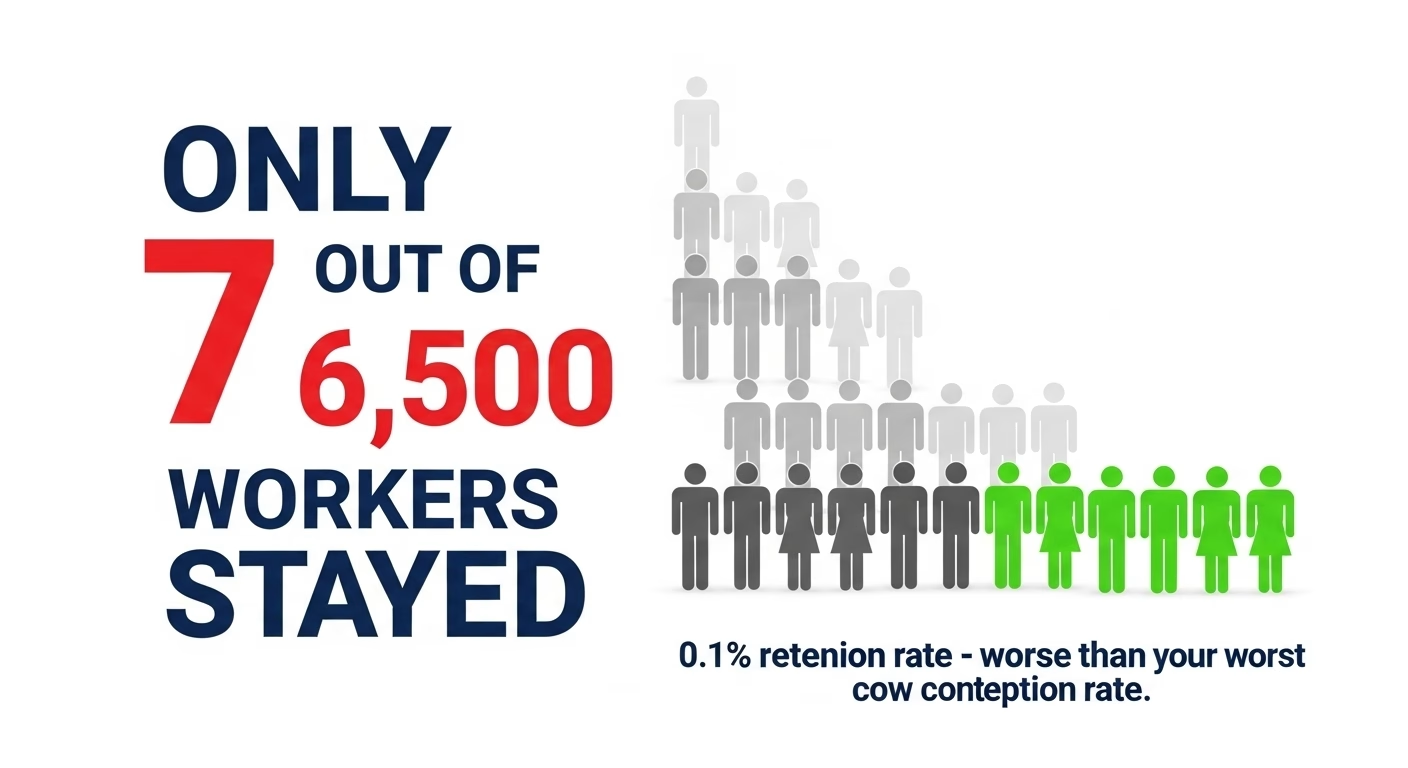
The Uncomfortable Data: In 2011, a program offered 6,500 agricultural jobs to domestic workers. Only 268 Americans applied. A mere seven stayed for the full season. Seven. Out of 6,500 openings. That’s a 0.1% retention rate—worse than your most problematic cow’s conception rate.

According to The Bullvine’s analysis, immigrant workers constitute 51% of the U.S. dairy workforce and are responsible for producing 79% of our milk supply, with substantial portions of these workers undocumented. This isn’t a workforce strategy—it’s a house of cards built on political quicksand.

Here’s the Critical Question: If domestic workers won’t take dairy jobs at current wages, and immigration policy remains hostile to agricultural labor, what’s your Plan B?

Geographic shifts in US dairy production showing Kansas (+15.7%) and Texas (+10.6%) leading growth while California declines (-1.8%)

International Crisis Comparison: The Global Meltdown

Data Box: Global Dairy Labor Catastrophe (2024-2025)

RegionLabor Crisis IndicatorProduction Impact
United States51% immigrant workforce producing 79% of milkGeographic shift: Kansas +15.7%, California -1.8%
European UnionOnly 12% of farmers under 40Milk production down 1.8% in Q1 2025
Canada5.4% dairy job vacancy rateProjected to lose 50% of farms by 2030
Australia55% of farmers are considering an exit30-year production low projected
New Zealand4,000 critical staffing shortagePolicy changes threatening migrant workers

Case Study Sidebar: The Wisconsin Catastrophe

Wisconsin exemplifies the demographic disaster facing dairy. According to The Bullvine’s immigration analysis, Wisconsin’s dairy industry relies on 70% immigrant labor, with more than 10,000 undocumented workers performing essential functions. The University of Wisconsin-Madison puts it bluntly: “Without them, the whole dairy industry would collapse overnight.”

This isn’t just labor dependency—it’s an existential threat to America’s Dairyland itself.

The $32 Billion Elephant in the Milking Parlor

Challenging Conventional Wisdom: The industry consistently downplays immigration’s role, treating it as a “preference” rather than an existential dependency. This isn’t preference—it’s survival.

The Bullvine’s economic analysis reveals that eliminating all immigrant labor in the U.S. could result in a catastrophic $32.1 billion economic output loss and over 200,000 job losses. Retail milk prices could spike by an alarming 90.4% to $7.60 per gallon. Even a 50% reduction in immigrant labor could result in 3,506 dairy farm closures.

Data Box: The Hidden Cost of Labor Instability

  • High Turnover Impact: 1.8% decrease in milk production
  • Biological Costs: 1.7% increase in calf loss, 1.6% increase in cow death rates
  • Average Recruitment Cost: $4,425 per employee
  • Industry Turnover Rate: 30-38.8% annually
  • 200-Cow Dairy Annual Cost: Over $11,000 in recruitment alone

But the biological costs are even more devastating: according to comprehensive industry analysis, employee turnover has been linked to a 1.8% decrease in milk production, a 1.7% increase in calf loss, and a 1.6% increase in cow death rates. Your labor instability is literally killing your livestock profitability.

Annual employee turnover costs escalate from $35K to $150K as dairy farms increase in size

The Technology Revolution: Separating Vendor Fiction from Farm Reality

Challenging the Automation Sales Pitch: While, at minimum, a 50 percent spike in dairy farm wages would add almost $1 per cwt. to the cost of production, making “robotic milking and other labor-saving technologies more cost effective,” the reality is more complex.

Here’s what the robot salesmen won’t tell you: the performance of robotic milking systems has “almost nothing to do with the hardware you bought and everything to do with how you manage it.” Farms with identical robots show dramatically different results based solely on management practices.

Case Study Sidebar: Dave Kammel’s Wisconsin Success

Wisconsin farmer Dave Kammel exemplifies successful strategic automation. According to The Bullvine’s robotic financing analysis, his installation of 2 robotic units delivered:

  • 3 hours of daily labor savings
  • “Best investment I’ve ever made” assessment
  • Dramatic quality of life improvements
  • Immediate operational efficiency gains

His experience demonstrates that automation transforms labor rather than eliminating it.

Robotic milking payback periods: Crisis conditions (18-24 months) vs Normal conditions (48-120 months)

Data Box: Verified Automation ROI (2022-2025)

  • Initial Investment per Robot: $150,000-$275,000
  • Annual Labor Savings: $32,000-$45,000 per robot
  • Direct Milking Labor Reduction: 60%
  • Milk Yield Increase: 8.66% average, up to 28.5% with proper management
  • Payback Period (Normal): 4-10 years
  • Payback Period (Crisis Conditions): 18-24 months

According to The Bullvine’s robotic financing research, delaying robotic adoption costs mid-sized farms up to $160,600 per year in lost profit potential, with top-performing robots generating a $500 per day difference compared to average implementations.

The Wage Competition Fallacy: Why Paying More Won’t Save You

Data Box: The Wage Reality Check (2025)

  • Farm Worker Average Wage: $17.55/hour – only 61% of non-farm wages
  • Dairy Labor Costs: 10-15% of production costs for 200+ cow herds
  • Estimated Range: $1.80-$2.30 per hundredweight
  • Competitive Wage Spike Required: Minimum 50% increase
  • Production Cost Impact: Nearly $1.00 per hundredweight increase

Analysis proves that competing with other sectors “based solely on wage would imply at minimum a 50 percent spike in dairy farm wages, which would add almost $1 per cwt. to the cost of production.” At that point, robotic milking becomes more cost-effective than wage competition.

This demolishes the conventional wisdom that “just pay more” solves labor shortages. The math doesn’t work.

Your Strategic Decision Framework: The Three-Pillar Transformation

Pillar 1: Labor-Light Operations

Immediate Actions (Next 30 Days):

  • Audit labor-intensive tasks vulnerable to disruption
  • Model ROI scenarios under both normal and crisis conditions
  • Research automation vendors before crisis-driven demand inflates pricing by 15-25%

12-Month Implementation: Based on verified performance data from comprehensive industry analysis:

  • Automated milking systems (60% labor reduction, 3-15% production increase)
  • Automated feeding systems ($75,000-$125,000 investment, 35-45% annual ROI)
  • Wearable sensors ($150-$200 per cow, 12-18 month payback)

Pillar 2: Human Capital Revolution

Case Study Sidebar: Progressive Employee Investment

The Bullvine’s human capital research shows that progressive dairy farms are discovering the “real cost of cheap labor.” One Wisconsin operation saw turnover drop from 7% to less than 1% after investing in employee housing—creating a waiting list for employment.

The Proven ROI of Human Investment:

  • Structured onboarding: 50% reduction in training time, 60-70% productivity boost
  • Quality housing: Dramatic retention improvements
  • Career pathways: 69% more likely to remain 3+ years
  • Employee development: $263,096 total ROI, including efficiency gains

Pillar 3: Market Positioning Advantage

While competitors struggle with labor costs, position yourself in premium markets. Escalating labor expenses compounds the difficulties faced by dairy farmers,” making premium positioning essential for funding automation and employee programs.

Table: The True Cost of Inaction vs. Strategic Adaptation (5-Year Projection)

ScenarioLabor Cost ImpactProduction ImpactTotal Financial ImpactCompetitive Position
Status Quo$55,000+ recruitment costs-1.8% annually-$200,000+Declining rapidly
Wage-Only Strategy50% increase requiredMinimal improvement-$150,000Temporarily stable
Partial Automation30% reduction+8.66% average+$100,000Moderately competitive
Full Transformation60% reduction+15-20%+$300,000+Market leadership

Your 30-Day Crisis Response Plan

Week 1: Crisis Assessment

  • Calculate true labor cost, including turnover, lost production, and biological impacts
  • Model three scenarios: current state, 50% labor reduction, full automation
  • Research automation financing options before crisis-driven demand

Week 2: Strategic Planning

  • Visit three automated operations in your region
  • Interview farmers with 2022-2025 installations for real-world insights
  • Calculate payback periods: 18-24 months under crisis vs. 4-10 years normal

Week 3: Financial Modeling

  • Explore innovative financing models: 0% manufacturer deals, leasing options, pay-per-liter programs
  • Assess infrastructure readiness: internet, power, barn layout
  • Develop implementation timeline: AMS (6-8 months), feeding systems (3-4 months)

Week 4: Implementation Decision

  • Choose the highest-impact, fastest-payback automation investment
  • Establish vendor partnerships before crisis-driven demand escalates costs
  • Create employee transition and retraining programs (90-120 days for competency)

The Bottom Line: Your Competitive Crossroads

Remember that shocking statistic from our opening? While 5,000 dairy jobs will go unfilled by 2030, smart operators aren’t just adapting—they’re using this transformation to eliminate competition and dominate market share.

The Harsh Reality: More than two-thirds of the country’s 9.36 million dairy cows are milked by immigrant workers,” yet policy uncertainty threatens this foundation. Meanwhile, The Bullvine’s analysis shows a potential $32.1 billion in economic losses if this workforce disappears.

Your Strategic Choice: The labor shortage isn’t your problem to solve—it’s your opportunity to seize. Every farm that closes due to labor challenges removes a competitor. Every operation that successfully automates gains market share.

Consider this final analogy: in the 1980s, the dairy industry faced a similar transformation with the shift from tie-stall to freestall housing. Farms that adapted early gained competitive advantages that lasted decades. Those who waited struggled to catch up or simply didn’t survive.

The labor crisis is today’s tie-stall to freestall moment—a fundamental operational transformation disguised as a temporary staffing problem.

Here’s your immediate next step: Calculate what your operation would look like with verified automation improvements: 60% labor reduction from robotics, 8.66% higher milk yields, and $160,600 annual profit potential per optimized robot. Then ask yourself: Are you building the farm that thrives in that reality or the one that becomes a historical footnote?

The farms that will dominate by 2030 aren’t those that solved the labor shortage—they’re the ones that made it irrelevant to their success through strategic technology adoption and workforce transformation.

Because in this industry, adaptation isn’t just about survival anymore—it’s about who defines the future of North American dairy farming.

KEY TAKEAWAYS

  • Automation ROI Accelerates Under Crisis: Robotic milking systems delivering $32,000-$45,000 annual labor savings per robot with payback periods compressed from 4-10 years to just 18-24 months under severe labor shortage conditions, while increasing milk yields 3-15% and reducing somatic cell counts 15-20%.
  • Hidden Labor Costs Devastate Operations: High employee turnover (30-38.8% industry average) triggers cascading biological impacts including 1.8% milk production decline, 1.7% calf loss increase, and 1.6% cow death rate increase, costing 200-cow dairies $11,000+ annually in recruitment before accounting for lost productivity.
  • Geographic Production Shift Signals Winners: Kansas exploded 15.7% in milk production while traditional stronghold California declined 1.8%, proving labor-efficient regions are capturing market share as farms master automated feeding systems ($75,000-$125,000 investment) with 35-45% annual ROI.
  • Immigration Dependency Creates $32B Risk: With immigrant workers producing 79% of U.S. milk supply, potential policy disruptions threaten 90.4% retail price spikes and 3,506 farm closures, making strategic automation a hedge against political volatility rather than mere efficiency upgrade.
  • Technology Transforms Rather Than Eliminates Labor: Successful farms shift from labor-intensive to management-intensive operations, requiring new skills in equipment operation, data interpretation, and troubleshooting—creating “robot operator” and “automation technician” roles that replace jobs nobody wanted with careers people value.

EXECUTIVE SUMMARY

The dairy industry’s “just hire more workers” strategy is dead—and here’s the $32.1 billion proof. With 51% immigrant workforce producing 79% of U.S. milk and 5,000 jobs going unfilled by 2030, the labor crisis isn’t temporary—it’s permanent transformation that separates winners from casualties. High turnover rates of 30-38.8% annually are costing 200-cow dairies over $11,000 in recruitment alone, while also triggering 1.8% milk production losses and 1.7% calf mortality increases. Strategic automation now delivers 60% labor reduction with crisis-accelerated paybacks of 18-24 months versus normal 4-10 years, making robotic milking systems and automated feeding essential survival tools, not luxury upgrades. From Kansas (+15.7% production) to California (-1.8% decline), geographic winners are emerging as farms master labor-light operations while competitors cling to obsolete hiring strategies. The farms dominating by 2030 won’t be those who solved the labor shortage—they’ll be the ones who made it irrelevant through strategic technology adoption and workforce transformation.

Complete references and supporting documentation are available upon request by contacting the editorial team at editor@thebullvine.com.

Learn More:

Join the Revolution!

Join over 30,000 successful dairy professionals who rely on Bullvine Weekly for their competitive edge. Delivered directly to your inbox each week, our exclusive industry insights help you make smarter decisions while saving precious hours every week. Never miss critical updates on milk production trends, breakthrough technologies, and profit-boosting strategies that top producers are already implementing. Subscribe now to transform your dairy operation’s efficiency and profitability—your future success is just one click away.

NewsSubscribe
First
Last
Consent

Trump Suspends Biden Farmworker Rule: Dairy Gets Administrative Relief, But Labor Cost Crisis Persists

Stop believing policy relief will fix your labor costs. Trump’s H-2A suspension won’t touch the 30% wage hikes crushing dairy margins.

EXECUTIVE SUMMARY: While dairy farmers celebrate Trump’s suspension of Biden’s farmworker rule, you’re missing the real crisis bleeding your operation dry. The 2024 rule suspension eliminates paperwork headaches but leaves the devastating 2023 disaggregation rule untouched – the policy driving agricultural labor costs toward $53 billion in 2025 with small farms facing 30% wage expense increases. The uncomfortable truth: H-2A’s seasonal limitations make it structurally incompatible with dairy’s 365-day milking needs, forcing smart operators toward automation investments with 60% labor reduction potential and 18-24 month ROI acceleration during labor shortages. Global competitors in New Zealand face 4,000-6,000 worker deficits while China accelerates automation adoption, creating competitive pressures U.S. dairy can’t ignore. The choice isn’t between traditional farming and technology anymore – it’s between strategic adaptation through robotic milking systems ($150,000-$275,000 per unit) and precision feeding software ($0.75-$1.50/cwt savings) versus gradual obsolescence in an increasingly expensive labor market.

KEY TAKEAWAYS

  • Labor Cost Reality Check: The untouched 2023 disaggregation rule forces farmers to pay $10-$18 more per hour for workers performing reclassified duties, with heavy truck drivers and supervisors commanding wages more than double standard farmworker rates – administrative relief won’t fix fundamental economics.
  • Automation Investment Imperative: Robotic milking systems delivering 60% labor reduction with ROI acceleration to 18-24 months during labor shortages, while automated feeding systems provide 35-45% annual returns, making technology adoption a survival strategy rather than luxury upgrade.
  • H-2A Structural Mismatch: Seasonal work requirements fundamentally conflict with dairy’s continuous production needs, limiting policy relief benefits while immigrant workers comprise 51% of U.S. dairy labor – forcing strategic workforce planning beyond government programs.
  • Global Competitive Pressure: New Zealand’s 4,000-6,000 worker shortages and China’s automation acceleration create international competitive dynamics favoring operations that can rapidly deploy capital-intensive solutions over manual labor dependence.
  • Strategic Transition Timeline: Current policy volatility accelerates the industry’s shift toward higher-skilled, technology-focused workforces – with successful farms viewing this as catalyst for strategic re-evaluation rather than waiting for political solutions to fix underlying workforce challenges.
dairy labor costs, farmworker rule suspension, H-2A program dairy, dairy automation ROI, agricultural labor policy

The Trump administration suspended enforcement of Biden’s 2024 farmworker protection rule on June 20, 2025, eliminating compliance headaches for agricultural employers using H-2A workers. But here’s the hard truth dairy farmers need to face: this won’t solve your core labor challenge, as the untouched 2023 disaggregation rule continues driving agricultural labor costs toward unprecedented levels – and dairy’s year-round needs make you particularly vulnerable.

The U.S. Department of Labor announced the immediate suspension, stating it provides “much-needed clarity for American farmers navigating the H-2A program” while reflecting “President Trump’s ongoing commitment to strictly enforcing U.S. immigration laws”. The decision addresses months of legal uncertainty created by federal court injunctions across 17 states blocking portions of the 2024 rule.

What Changed for Agricultural Employers

The suspended 2024 “Farmworker Protection Rule” eliminated six major compliance requirements that are now off the table:

  • Enhanced worker voice protections, including anti-retaliation policies in employer-furnished housing
  • Stricter termination criteria requiring progressive discipline procedures before dismissing H-2A workers
  • Immediate wage rate implementation, eliminating the traditional two-week buffer period for Adverse Effect Wage Rate updates
  • Expanded transparency mandates requiring disclosure of all recruiter agreements and productivity standards
  • Transportation safety requirements mandating seat belt use for all passengers in employer-provided vehicles
  • Streamlined employer accountability procedures for debarring non-compliant operations

Agricultural employers now operate under pre-2024 H-2A regulations, removing what the Department of Labor called “significant legal uncertainty, inconsistency, and operational challenges”.

The Real Financial Killer Remains Untouched

Here’s where dairy farmers need to wake up: the suspension provides administrative relief, but it doesn’t touch the more devastating cost driver – the Department of Labor’s 2023 “disaggregation rule”.

This rule fundamentally altered wage determination by reclassifying farm jobs into higher-paying categories based on national wage data rather than traditional farm labor surveys. Workers performing duties beyond six standard farm occupations now command significantly higher wages.

The numbers are crushing operations nationwide:

  • Heavy truck drivers earn over $10 more per hour than standard farmworkers
  • In California, construction laborers make $11.83 more per hour than farmworkers
  • In Georgia, supervisors earn $18.61 more per hour – more than twice farmworker wages
  • Small farms using H-2A workers face 30% increases in total wage expenses
  • Large operations see annual increases exceeding 10%

The disaggregation rule requires farmers to pay the highest applicable wage if workers perform any reclassified duties, regardless of frequency.

Why Dairy Gets Hit Hardest

The H-2A program’s fundamental limitation creates a structural nightmare for dairy farms: the program requires work to be “temporary or seasonal,” directly conflicting with dairy’s year-round operational needs.

Sarah Black, agricultural labor consultant with Great Lakes Ag Labor Services, explains the cruel irony: “Milking cows has to be done 365 days a year, but these workers can do everything else. They can help with planting, harvesting, hauling manure, and many of those activities on the farm that we don’t do 365 days a year, so there is a role for H-2A in dairy. You just can’t put them in the parlor to milk cows”.

This structural incompatibility means that administrative relief provides limited direct benefits to dairy’s core labor challenges. Here’s the sobering reality: immigrant workers comprise 51% of U.S. dairy labor, with 46-70% undocumented according to National Milk Producers Federation data. Research shows dairy labor costs range from $2.42 to $6.15 per hundredweight of milk, representing a significant operational expense that the H-2A program cannot comprehensively address due to its seasonal limitations.

What This Means for Farmers: The Automation Imperative

Smart dairy operators are already reading the writing on the wall. The persistent labor cost pressures aren’t going away, and they’re accelerating strategic investments that separate winners from losers.

The technology adoption numbers tell the story:

  • Robotic milking systems reduce direct milking labor by 60%, with costs ranging from $150,000 to $275,000 per unit
  • Current adoption shows 8% of farmers using automated milking systems (AMS) while 18% are considering implementation
  • ROI acceleration to 18-24 months during severe labor shortages makes these investments increasingly attractive
  • Automated feeding systems deliver 35-45% annual returns
  • Precision feeding software saves $0.75-$1.50 per hundredweight through optimized feed delivery

Consider this reality check: while domestic workers cost $15-25 per hour, H-2A workers run $25-30 per hour – and that’s before factoring in housing and administrative costs. For a 500-cow operation milking three times daily, labor represents roughly 35-40% of total operating costs. When those costs spike 30%, automation doesn’t just make sense – it becomes survival.

Industry Response: Mixed Signals on Reality

American Farm Bureau Federation President Zippy Duvall praised the administration: “Farm Bureau thanks Secretary Lori Chavez-DeRemer and the Trump administration for recognizing the obstacles created by this complex rule, which pits workers against their employers”.

But here’s what industry leaders aren’t saying publicly: the suspension addresses paperwork, not paychecks. The most common disaggregated H-2A occupations include heavy truck drivers (1.5%), construction laborers (0.6%), first-line supervisors (0.1%), and shuttle drivers (0.5%), though 96% of H-2A workers still qualify as traditional farmworkers.

The real question isn’t whether administrative relief helps – it’s whether dairy operations can continue competing with business models built on increasingly expensive manual labor.

Global Competitive Reality Check

While U.S. farmers navigate policy volatility, international competitors aren’t standing still. New Zealand struggles with 4,000-6,000 worker shortages amid tightening visa requirements for agricultural workers. The European Union maintains comprehensive migrant worker frameworks but battles exploitation gaps, and Green Deal regulations are increasing production costs. China accelerates automation adoption with robotic milking systems and precision farming.

The policy uncertainty here creates a perverse advantage for operations that can rapidly deploy capital-intensive solutions. Larger, well-financed farms using genomic testing, automated systems, and precision management gain competitive edges that smaller operations struggle to match.

What Farmers Need to Monitor

Three developments will determine whether your operation thrives or merely survives:

Legal challenges to the 2023 disaggregation rule – the untouched cost driver that’s bleeding operations dry.

Congressional action on comprehensive immigration reform – potentially the only long-term solution for addressing year-round agricultural labor needs beyond H-2A’s seasonal limitations.

Technology adoption acceleration – as automation becomes the difference between competitive operations and those priced out of the market.

The Bottom Line

The Trump administration’s suspension eliminates administrative headaches but doesn’t address the fundamental economics that are crushing dairy labor budgets. For dairy operations, relief is particularly limited due to H-2A program seasonal restrictions that conflict with continuous production requirements.

While farmers gain regulatory clarity, the underlying economics continue deteriorating through the 2023 disaggregation rule’s wage increases. This policy change represents an aspirin for a labor cost hemorrhage.

Smart operators will use this breathing room to accelerate two critical strategies: workforce retention programs emphasizing competitive wages and quality housing, while fast-tracking investments in robotic systems and precision monitoring technology. The suspended rule eliminated paperwork headaches, but the economic fundamentals driving dairy toward automation and higher-skilled, technology-focused workforces remain unchanged.

Here’s the uncomfortable truth the industry needs to confront: those preparing for this technology-driven transition now will emerge stronger and more competitive. Those waiting for policy solutions to fix their labor problems may find themselves priced out of milk production entirely. The choice isn’t between traditional farming and automation anymore – it’s between strategic adaptation and gradual obsolescence.

Complete references and supporting documentation are available upon request by contacting the editorial team at editor@thebullvine.com.

Learn More:

Join the Revolution!

Join over 30,000 successful dairy professionals who rely on Bullvine Weekly for their competitive edge. Delivered directly to your inbox each week, our exclusive industry insights help you make smarter decisions while saving precious hours every week. Never miss critical updates on milk production trends, breakthrough technologies, and profit-boosting strategies that top producers are already implementing. Subscribe now to transform your dairy operation’s efficiency and profitability—your future success is just one click away.

NewsSubscribe
First
Last
Consent

ICE Raids Resume: Why Dairy’s $48 Billion Labor Crisis Exposes Our Innovation Failure

Stop betting your farm’s future on immigration policy. Smart dairies are building tech-powered operations that crush 79% labor dependency.

EXECUTIVE SUMMARY: While competitors panic over workforce politics, progressive dairy operations are turning immigration uncertainty into competitive advantage through strategic automation investments. New analysis reveals that 51% of America’s dairy workforce consists of immigrants producing 79% of the nation’s milk supply, yet fewer than 15% of U.S. dairies have implemented robotic milking systems compared to 35% in Denmark. Robotic milking systems deliver 18-24 month payback periods when labor becomes unreliable, while generating 8-12% higher milk yields per cow and 15-20% reductions in somatic cell counts. Forward-thinking operations are capitalizing on this crisis by accelerating technology adoption, with AI-powered herd management systems delivering 200-300% ROI through improved breeding efficiency and automated feeding systems achieving 35-45% annual returns when factoring labor stability premiums. The uncomfortable truth: farms that haven’t invested in operational independence are about to discover that labor uncertainty is the price of technological complacency. Stop hoping politicians solve your operational problems—start building technology-based competitive advantages that transcend political volatility.

KEY TAKEAWAYS

  • Automation ROI Accelerates Under Crisis: Robotic milking systems ($150,000-$200,000 per 60-70 cow robot) now deliver payback in 18-24 months versus normal 3-4 years when labor becomes unreliable, while eliminating 1.5 full-time positions per robot and boosting milk yield by 8-12%
  • Technology-Forward Operations Build Permanent Moats: Automated systems maintain 24/7 operational precision regardless of external disruptions, achieving 15-20% lower somatic cell counts than manual operations while enabling expansion without proportional labor increases
  • Smart Money Flows Toward Dairy Tech: Agricultural robotics investment hit $1.2 billion in 2024 with dairy automation receiving 35% of funding—progressive operations are leveraging crisis-driven acceleration to secure competitive advantages before demand spikes pricing
  • Precision Livestock Farming Delivers Measurable Results: AI-powered health monitoring and automated estrus detection systems ($50-75 per cow annually) generate 200-300% ROI through 95%+ breeding accuracy and predictive health algorithms preventing 80% of metabolic disorders
  • Government Incentives Accelerate Adoption: USDA’s Environmental Quality Incentives Program provides up to 75% cost-share for precision agriculture technology, while automated operations qualify for 15-25% insurance premium reductions due to reduced liability exposure
dairy automation ROI, robotic milking systems, dairy labor shortage, automated milking technology, dairy farm efficiency

The Trump administration’s immigration enforcement reversal just proved that dairy’s workforce dependency isn’t a political issue—it’s a technology adoption failure that progressive operations can turn into a competitive advantage. While 79% of America’s milk supply depends on immigrant labor, smart operators are asking why we’re still debating workforce politics instead of accelerating automation that could solve the problem permanently. The uncomfortable truth? Farms that haven’t invested in robotics and AI-powered systems are about to discover that labor uncertainty is the price of technological complacency.

Here’s the question every dairy manager should ask: If your operation can’t function without a workforce that’s perpetually at risk, what does that say about your strategic planning?

The Real Story: Technology Laggards Got Caught Unprepared

Let’s cut through the political noise and focus on what this crisis reveals about dairy’s innovation gap. When ICE resumed worksite enforcement after a three-day pause, 25-45% of agricultural workers stopped showing up in California’s Central Coast, and a New Mexico dairy farm watched its workforce plummet from 55 to 20 employees in hours.

But here’s what the headlines missed: the farms that weathered this crisis best were those that had already invested in automated milking systems, robotic feed pushers, and AI-powered health monitoring.

Research from the National Milk Producers Federation shows that 51% of all dairy workers are immigrants, with farms employing immigrant labor producing 79% of the U.S. milk supply. Yet according to industry data, fewer than 15% of U.S. dairies have implemented robotic milking systems, compared to 25% in the Netherlands and 35% in Denmark.

Why are we surprised by workforce disruption when we’ve been ignoring available solutions for a decade?

The Economics of Innovation vs. Dependence

Economic analysis reveals that eliminating immigrant labor would reduce the U.S. dairy herd by 2.1 million cows and spike milk prices by 90.4%. But these catastrophic projections assume static technology adoption—exactly the kind of short-sighted thinking that got us into this mess.

Consider the ROI mathematics that forward-thinking operations are already implementing:

Robotic Milking Systems:

  • Initial investment: $150,000-$200,000 per robot serving 60-70 cows
  • Labor reduction: Eliminates 1.5 full-time milking positions per robot
  • Milk quality improvement: 15-20% reduction in somatic cell counts
  • Production increase: 8-12% higher milk yield per cow
  • Payback period: 3-4 years under normal conditions, accelerated to 18-24 months when labor becomes unreliable

Automated Feed Systems:

  • Investment: $75,000-$125,000 for 500-cow operation
  • Labor savings: 2-3 hours daily feeding labor
  • Feed efficiency: 5-8% improvement in feed conversion
  • ROI: 35-45% annually when factoring labor stability premium

Case Study: Glenn Valley Foods and the E-Verify Illusion

The recent ICE raid at Glenn Valley Foods in Omaha perfectly illustrates why compliance isn’t enough—you need operational resilience. Despite full E-Verify participation, ICE detained 70-80 workers, with agents reportedly dismissing the compliance program as “broken.”

Here’s the brutal reality: compliance doesn’t protect against disruption, but technology does.

Progressive meatpacking facilities are already implementing:

  • Automated cutting systems reduce manual labor by 40%
  • AI-powered quality inspection replacing visual inspection roles
  • Robotic packaging lines eliminate repetitive manual tasks

The lesson? Stop betting your operation’s future on immigration policy and start investing in operational independence.

Why Technology Adoption Accelerates During Uncertainty

Smart money is flowing toward dairy tech precisely because of labor uncertainty. Venture capital investment in agricultural robotics reached $1.2 billion in 2024, with dairy automation receiving 35% of total funding.

Three technologies seeing accelerated adoption:

1. Precision Livestock Farming (PLF) Systems

  • Real-time health monitoring through wearable sensors
  • Automated estrus detection with 95%+ accuracy
  • Cost: $50-75 per cow annually
  • ROI: 200-300% through improved breeding efficiency and health outcomes

2. Automated Milking and Feeding Integration

  • Fully integrated barn management systems
  • Predictive analytics for feed optimization
  • Investment: $400,000-600,000 for 500-cow operation
  • Labor reduction: 60-70% of routine daily tasks

3. AI-Powered Herd Management

  • Predictive health algorithms preventing 80% of metabolic disorders
  • Automated culling recommendations based on genetic merit and performance
  • Subscription cost: $3-5 per cow monthly
  • Productivity gains: 15-25% improvement in herd efficiency metrics

The Competitive Advantage Hidden in Crisis

While competitors scramble to replace workers, technology-forward operations build permanent competitive moats. Consider these strategic advantages:

Operational Consistency: Automated systems maintain 24/7 operational precision regardless of external disruptions.

Quality Control: Robotic milking systems consistently achieve lower somatic cell counts and higher component quality than manual operations.

Data-Driven Optimization: AI systems continuously optimize feeding, breeding, and health protocols beyond human capability.

Scalability: Automated operations can expand capacity without proportional labor increases.

Global Reality Check: We’re Already Behind

While America debates immigration policy, competing dairy nations are building technological advantages. New Zealand’s dairy operations average 40% higher productivity per worker through systematic automation adoption. European Union dairy farms receive direct subsidies for technology upgrades, while U.S. operations debate labor policy.

Are we really going to cripple our global competitiveness while international competitors mechanize their advantage?

The Innovation Acceleration Playbook

Progressive operations are treating this crisis as an automation catalyst. Here’s the strategic framework smart managers are implementing:

Phase 1: Critical Function Automation (0-12 months)

  • Automated milking systems for the largest operational risk
  • Robotic feed pushers for consistent nutrition delivery
  • Priority ROI: Focus on labor-intensive, time-sensitive operations

Phase 2: Integrated System Optimization (12-24 months)

  • AI-powered herd management platforms
  • Automated health monitoring and treatment protocols
  • Advanced analytics for predictive decision-making

Phase 3: Competitive Moat Development (24-36 months)

  • Full barn automation integration
  • Predictive breeding and culling algorithms
  • Market-differentiated quality and efficiency metrics

Financial Engineering for Technology Adoption

Smart operators are restructuring financing to accelerate technology adoption:

Equipment Leasing with Labor Stability Premiums: Financial institutions now offer reduced rates for automation investments, recognizing labor risk mitigation value.

Government Incentive Optimization: USDA’s Environmental Quality Incentives Program (EQIP) provides up to 75% cost-share for precision agriculture technology.

Insurance Premium Reductions: Automated operations qualify for 15-25% reductions in operational insurance premiums due to reduced liability exposure.

The Bottom Line: Innovation Beats Immigration Policy

The Trump administration’s policy reversal just taught us that depending on political stability for operational continuity is strategic malpractice. While competitors waste energy debating workforce policies, progressive operations build technology-based competitive advantages that transcend political volatility.

The next enforcement surge is inevitable. The only question is whether your operation will be ready.

Here’s your action plan:

  • Audit labor dependencies immediately – identify critical functions vulnerable to workforce disruption
  • Model automation ROI scenarios – calculate payback periods under current vs. disrupted labor conditions
  • Implement priority technologies within 90 days – start with the highest-impact, fastest-payback automation
  • Build technology partnerships – establish relationships with automation vendors before crisis demand spikes pricing
  • Develop workforce transition strategies – retrain existing workers for technology oversight roles

The uncomfortable truth? This crisis isn’t about immigration—it’s about whether your farm is prepared for the future of dairy. Technology-forward operations will emerge stronger, more efficient, and competitively superior.

The rest will keep hoping politicians solve their operational problems.

Learn More:

Join the Revolution!

Join over 30,000 successful dairy professionals who rely on Bullvine Weekly for their competitive edge. Delivered directly to your inbox each week, our exclusive industry insights help you make smarter decisions while saving precious hours every week. Never miss critical updates on milk production trends, breakthrough technologies, and profit-boosting strategies that top producers are already implementing. Subscribe now to transform your dairy operation’s efficiency and profitability—your future success is just one click away.

NewsSubscribe
First
Last
Consent

Robot Revolution: Why Smart Dairy Farmers Are Winning with Automated Milking

Are robots the future of dairy farming? With labor shortages crippling the industry, more farmers are turning to automated milking systems. But do the numbers add up? Discover how robotic technology is revolutionizing dairy operations and why some producers are seeing record profits while others struggle to adapt.

robotic milking systems, dairy automation ROI, automated dairy technology

The dairy industry is transforming at breakneck speed as robotic milking systems rapidly replace traditional parlors across North America. While some farmers hesitate at the cost or complexity, thousands of forward-thinking producers are already reaping the benefits of this technological revolution.

With increasingly scarce and expensive farm labor, the question isn’t whether you can afford robots—it’s whether you can afford not to have them.

Impressive Performance: What Today’s Robotic Systems Deliver

The data doesn’t lie. According to extensive surveys by the University of Wisconsin-Madison covering 635 dairy farms with robots (mainly in Minnesota, Wisconsin, and parts of Canada), the average robot handles about 50 cows and harvests around 3,667 pounds of milk daily.

The cows visit the robot 2.9 times daily, spending about 7 minutes per visit.

Canadian farms show similar results, averaging 76 pounds of milk per cow daily, with each robot serving about 49 cows. Australian farms using robotic systems generally run 3 to 4 robots, milking 150 to 240 cows in total, with each cow producing between 19.3 and 26.3 kilograms daily.

“The efficiency difference between farms is what separates those making money with robots from those just getting by,” says Larry Tranel, Dairy Field Specialist with Iowa State University Extension.

According to extension research, some farms get only 1.4 kg of milk per minute of robot time, while others achieve 2.0 kilograms per minute. At 1,180 available milking minutes per day (after accounting for washing and maintenance), that’s a difference between harvesting 1,650 kg versus 2,360 kg of milk from the same equipment.

That’s over 700 kg more milk daily without spending a single dollar on new equipment!

The efficiency differences often come down to individual cows. Two cows might produce nearly identical amounts of milk, but one could be hogging the robot.

The data shows that one cow produces 48 kg of milk using 47 minutes of robot time daily, compared to a more efficient cow that produces 49.5 kilograms in just 17.2 minutes. That’s why progressive dairy farmers are now making culling decisions based on robot efficiency metrics rather than raw production numbers.

Most robots perform between 106 and 120 milkings daily and operate for about 13 hours daily. Each milking visit takes about 6.3 minutes and yields approximately 10.4 kg of milk, roughly five cow milkings per hour, though this varies throughout the day.

“A cow that produces the same amount of milk in half the robot time doubles your milking capacity without buying new equipment.”

Cash Flow Impact: How Robots Boost Your Bottom Line

The productivity boost from robots comes from increased milking frequency. Instead of the traditional twice-a-day milking, cows in robotic systems visit the milking station whenever they choose, resulting in an average of 2.5 to 3 milkings daily.

This increased frequency typically boosts milk yield by 3-5 pounds per cow daily.

This isn’t just theoretical. According to Dairy Management Specialist Camila Lage from Cornell Cooperative Extension, a multi-university collaborative study recently confirmed consistent increases in milk production for dairies converting to robotic milking systems across the nation.

The Dukelow family of Dukestead Acres in Clark County, Wisconsin, launched their robotic milking operation in January 2023 with six DeLaval VMS V300 units and later added a seventh. With 450 cows, they made the transition after facing serious labor challenges.

“Our parlor was over 20 years old,” explains Monica Dukelow. “We were faced with the decision of replacing the parlor or taking advantage of the advancements in technology, moving forward with robots. The labor struggles we were facing helped make that decision.”

Jon Dukelow adds that they had been preparing for this transition for years: “We’ve always mapped our cows to have good udders. In the past 5-6 years, we have focused on square udders with no reverse tilt and ideal teat length.”

This strategic breeding approach created robot-ready cows, maximizing the return on their technology investment.

Labor savings provide another significant advantage. According to USDA data, milking typically accounts for 40-50% of a dairy farm‘s total labor costs, while labor represents 20-30% of total dairy expenses.

Large parlor operations often require 2-6 skilled workers across three shifts. Robots dramatically reduce this labor requirement while changing the nature of the remaining work.

The consistency of robotic milking benefits cows significantly. No matter how well-trained, human milkers have good days and bad days. Robots provide the same gentle, predictable experience every time, leading to improved cow welfare and reduced stress—two factors often cited by farmers as primary reasons for adopting automated milking systems.

Data-driven management is the most underappreciated advantage of robotic systems. Modern robots track hundreds of data points on each cow, from milk conductivity (which indicates potential mastitis) to rumination time and activity levels.

This allows for early intervention before problems become severe, saving on veterinary costs and preventing production losses.

Show Me the Money: Real ROI Numbers You Can Trust

Let’s cut through the sales pitch and talk real numbers. Robotic milking systems require a substantial upfront investment. A single-box robot typically costs $150,000-$200,000 to install, while a four-box system can run $500,000-$700,000, depending on the setup and retrofitting needed.

According to January 2025 data from Persistence Market Research, the North American market is expected to grow from US$641.9 million in 2025 to US$1,086.9 million by 2032. This represents a 7.8% compound annual growth rate, proving that farmers find financial value in these systems despite their hefty price tag.

The U.S. is projected to see a 7.4% CAGR through 2032, with dairy farms in regions like Wisconsin, California, and New York leading adoption to address rising labor costs and workforce shortages.

So, how do you know if robots make financial sense for your farm? Three factors drive the return calculation:

Investment FactorTypical Range/Impact (2025 Data)
Initial Investment Per Robot$150,000-$200,000
Annual Labor Savings Per Robot$32,850-$45,000
Production Increase3-15% (farm dependent)
Payback Period4-7 years

For a more detailed breakdown of costs, Iowa State University Extension provides these industry-standard values:

AMS Investment ComponentsIndustry Standard Values (2025)
Estimated Cost per Robot (including housing)$220,000
Annual Maintenance/Repair Cost$7,000 per robot
Typical Herd Size per Robot55-65 milking cows
Expected Useful Life10 years
Estimated Salvage Value$40,000 per robot (18% of purchase price)

The decision heavily influences the economics of scale. DairyLogix research shows how robotic systems compare to conventional parlors at different herd sizes:

Herd SizeRobotic Milking System2×12 Automated Parlor2×8 Basic Parlor
60 Cows$220,000$325,000$180,000
120 Cows$440,000$325,000$180,000
240 Cows$880,000$450,000$225,000
480 Cows$1,760,000$650,000$350,000

This table illustrates that robots can be cost-competitive with modern parlors for smaller herds when all factors are considered. At the same time, more extensive operations face higher capital costs for robotic systems.

Labor savings often provide the most apparent return. If you currently pay $20/hour (including benefits and taxes) for milking labor, and each robot replaces 4.5 hours daily, you’ll save $32,850 annually per robot. This number can be substantially higher in areas with severe labor shortages or high wages.

Milk production increases typically contribute the second-largest financial return. A conservative 5% production increase on a 60-cow robot averaging 80 pounds per cow at $20/cwt equals approximately $43,800 in additional milk revenue annually. Farms achieving more significant production increases see significantly better returns.

The economic impact of animal welfare improvements is more challenging but still significant. Most farms report reduced culling rates and veterinary expenses after implementing robotic milking.

The farms that fail with robots usually make one of three critical mistakes:

  1. They fail to adjust their management approach to match the technology
  2. They don’t select or breed for cows that perform efficiently in robotic systems
  3. They attempt to retrofit inappropriate facilities rather than designing for optimal cow flow

“The farms still milking by hand in 2025 are the same ones who insisted cell phones were just a fad.”

The Reality Check: What No One Tells You About The Transition

The shift to robotic milking has challenges; equipment dealers often downplay the adjustment period. Understanding these before you start can save you significant headaches.

Chad Kieffer, a third-generation farmer from Utica, Minnesota, uses five robots to milk his 350 cows. He’s part of a growing trend—according to Michigan State University, robotic milkers were first introduced in the United States in 2000. Over 35,000 robotic milking units are worldwide, with thousands in the U.S.

The training period represents the most immediate hurdle. Cows need time to learn the new system; production typically dips during this adjustment phase. Plan for a 10-15% production drop in the first three weeks, followed by a gradual recovery over the next month or two as cows adapt.

Farm layout is crucial for robotic success. Cow flow—how animals move between the robot, feed bunks, and resting areas—can make or break a system’s performance. The Dukelows at Dukestead Acres specifically mention liking the “guided-flow setup” of their DeLaval system, which helps decrease fetch cows.

The challenges multiply in grazing operations. Australian research highlights that greater distances between paddocks and robots significantly impact system performance compared to confined housing systems.

Technical support availability must be considered before purchasing. With the explosive growth in robotics—estimated at 20-25% annually according to Iowa State University Extension—service technicians are stretched thin. Before signing any contract, verify response times and emergency support options.

Staff adaptation presents another significant challenge. A recent study of U.S. farms with seven or more AMS boxes found that farmers perceived labor savings and better working conditions but also noted the need for different skills to manage the technology effectively.

Future-Proof Your Farm: Why Tomorrow’s Leaders Are Automating Today

The robotic milking market continues to grow rapidly. Global projections show North America leading this expansion, with an expected 30.8% market share in 2025 and a growth rate of 7.8% annually through 2032.

Market research firms provide compelling data on the growth trajectory of robotic milking systems:

Market MetricSourceValue
Global Market Size 2025Fact.MRUS$ 2.5 billion
Global Market Size 2035Fact.MRUS$ 4.66 billion
Global CAGR 2025-2035Fact.MR6.4%
North American Market Share 2025Fact.MR30.8%
Annual Growth Rate (Alternative Estimate)Business Research Company14.0-15.4%

This growth isn’t happening by accident. As Bullvine reported in January 2025, “Adopting robotic milking systems is a significant change for family dairy farms. The challenges might seem harsh, but the benefits—better efficiency, improved cow health, and a better work-life balance for farmers—are enormous. In today’s dairy world, these technologies are crucial for farms that want to succeed.”

Integration with other farm systems is becoming more seamless. Many robotic systems now coordinate with automatic feed pushers, activity monitors, and farm management software. DeLaval and Lely continue to lead innovations in automated systems, with each company offering comprehensive solutions beyond just milking.

Environmental benefits are also increasingly recognized. More precise feeding through robotic systems can reduce waste and methane emissions. Energy-efficient designs are reducing the carbon footprint of milking, addressing growing consumer concerns about sustainability.

For smaller and mid-sized family farms, robotic milking may offer the only path to survival in an industry trending toward consolidation. The technology enables family operations to compete with larger farms while maintaining a quality of life that will attract the next generation back to the farm.

Five Deal-Breaking Questions Your Robot Dealer Hopes You Won’t Ask

Before signing any contract for a robotic milking system, make sure you get clear answers to these critical questions:

  1. What’s your typical response time for emergency service calls? (And get this in writing in your service contract)
  2. Can you provide references from farms in my area that have had your robots for at least 3 years? (New installations are exciting, but you want to know how the equipment holds up over time)
  3. What percentage of your customers achieve a 4-year or better payback period, and what do they do differently? (Make them prove their ROI claims with real numbers)
  4. How many service technicians do you have in my region, and how many robots do they cover? (More than 25-30 robots per technician should raise red flags)
  5. What are the three most common problems your customers experience in years 2-5 of ownership, and what do those repairs typically cost? (Every system has weaknesses—knowing them in advance lets you budget properly)

The Decision: Is Your Farm Ready for Robots?

So, how do you decide if robotic milking makes sense for your operation? Start by honestly evaluating these key areas:

Labor situation: The dairy industry is facing an unprecedented labor crisis. According to University of Wisconsin-Madison researcher Douglas Reinemann, 500 to 1,000 U.S. operations now use milking robots. Early adopters gain an advantage in attracting and retaining the limited skilled labor in the industry.

Financial position: Despite the substantial upfront cost, lenders are increasingly familiar with financing robotic systems. Given the industry’s labor uncertainties, many see robotics as a risk-reduction strategy.

Herd management: Your current herd health, reproduction program, and production levels will affect potential gains from robotics. The Dukelows’ experience shows the importance of breeding robot-ready cows with good udder conformation.

Facility compatibility: Retrofitting existing barns for robots can be challenging. According to survey data from large AMS herds, most farms constructed new barns with open stalls and easy cow movement to facilitate optimal use of these systems.

Technical aptitude: Today’s dairy farmers must embrace technology or risk being left behind. The explosion in robotic adoption—projected to double approximately every three years according to the “Rule of 72” with 24% growth—shows that your competitors are already making this transition.

Plans: The investment timeline makes sense if you continue dairy farming for the next decade. More importantly, robotic technology may be essential to returning the next generation to the farm.

“The biggest surprise for most farmers isn’t that robots work—it’s how quickly they wish they’d made the change sooner.”

In today’s dairy world, robotic milking isn’t just an option—it’s becoming necessary for farms that want to thrive rather than merely survive. As labor challenges intensify, consumer demands evolve, and margins remain tight, automated systems provide a path forward that balances tradition with technology.

The question isn’t whether robots will become the industry standard—they already are. The only question is whether your farm will lead this revolution or be left behind watching others profit from it. The 7.8% annual growth rate in the North American market tells the story: thousands of dairy farmers have already decided.

What’s yours?

Key Takeaways

  • Increased Efficiency: Robotic milking systems allow for more frequent milking, boosting production by 3-5 pounds per cow daily compared to traditional methods.
  • Labor Savings: Automating milking can significantly reduce labor costs. Robots can save $32,850 per year by replacing manual milking hours.
  • Improved Cow Welfare: Robots provide a consistent and stress-free milking experience, contributing to better overall cow health and reduced veterinary costs.
  • Real ROI: Initial investments for robotic systems range from $150,000 to $200,000 per robot, with payback periods typically between 4 to 7 years based on increased milk production and reduced labor costs.
  • Market Growth: The North American robotic milking market is projected to grow from $641.9 million in 2025 to over $1 billion by 2032, indicating strong industry confidence in this technology.
  • Strategic Breeding: Successful robotic operations often involve strategic breeding programs prioritizing udder conformation suitable for automation, maximizing the technology’s effectiveness.
  • Adaptation Challenges: Transitioning to robotic milking requires careful planning, including adjustments in farm layout, staff training, and understanding the technology’s capabilities.
  • Future-Proofing: Embracing robotic technology is becoming essential for dairy farms, aiming to remain competitive and attract the next generation of farmers.

Summary

The dairy industry is undergoing a significant transformation as robotic milking systems gain traction among producers facing labor shortages and rising operational costs. This article explores the impressive performance metrics of these automated systems, highlighting their ability to increase milk production and reduce labor expenses. By examining real-world examples, ROI calculations, and the challenges of transitioning to robotics, we provide valuable insights for dairy farmers considering this technology. With a projected market growth rate of 7.8% annually, robotic milking is becoming essential for farms aiming to thrive in a competitive landscape while enhancing cow welfare and operational efficiency.

Learn more

Join the Revolution!

Join over 30,000 successful dairy professionals who rely on Bullvine Daily for their competitive edge. Delivered directly to your inbox each week, our exclusive industry insights help you make smarter decisions while saving precious hours every week. Never miss critical updates on milk production trends, breakthrough technologies, and profit-boosting strategies that top producers are already implementing. Subscribe now to transform your dairy operation’s efficiency and profitability—your future success is just one click away.

NewsSubscribe
First
Last
Consent
Send this to a friend